An AI-powered ERP software is enhanced with artificial intelligence, enabling ERP to learn from data, improve reasoning skills, and take actions to achieve specified business goals. The underlying AI technologies powering ERP may include deep learning architectures, machine learning algorithms, natural language processing, and generative AI, among others. By enabling real-time monitoring and prediction of future outcomes, AI-driven ERP software is transforming manufacturing efficiency and organization-wide decision-making.
Why are AI-Enabled ERP Solutions Gaining Importance in Manufacturing Process?
With the introduction of AI in ERP, the large amount of data generated in factories, including data from IoT sensors, transactional and operational data across business functions, can now be exploited to gain new business intelligence. Because AI-enabled ERP solutions can analyze and learn from vast data sets as well as recognize patterns in them, these intelligent systems are being increasingly deployed to solve complex business problems and gain actionable insights.
Not surprisingly, digital technology adoption is booming in India, with manufacturers expected to spend 40% of their total expenditure on digital technology in 2025 compared to 20% in 2021, as stated in the NASSCOM report. This tech momentum is fueling the adoption of AI-enabled manufacturing solutions as well.
Let’s look at the key factors that are promoting the use of AI in Manufacturing Software:
1. Rising Competition: Current competition is no longer about large-scale production abilities, but about the flexibility to respond to changing customer requirements at speed and deliver high-precision quality, all while maintaining leaner operations at lower costs.
2.Supply Chain Disruptions: Prolonged supply chain disruptions like COVID-19 and ongoing geopolitical conflicts are a crucial lesson for manufacturers that staying agile and flexible forever is the only way to mitigate business risks.
3. Faster Decision-Making: Waiting for monthly or weekly reports before a decision is taken is not the way forward. Today, manufacturers want to make swift data-driven decisions and have actionable intelligence at their fingertips.
4. Access to Technology: As cloud ERP solutions see wider adoption in the manufacturing sector, leveraging AI capabilities has become more accessible, leading to rapid scalability. Besides, it promotes faster collaboration with vendors and clients.
Benefits of Using Artificial Intelligence in Manufacturing Software
By adopting AI software tools for manufacturing, forward-thinking leaders are ultimately seeking new ways to improve efficiency, reduce costs, and deliver more value to their customers. The following benefits of AI in ERP are worth taking note of :
1. Faster Resolution of Production Issues
AI-driven ERP platforms integrated with production software & IoT devices enable manufacturers to identify production variances at the micro level, thereby preventing avoidable downtime.
2. Intelligent Automation of Repetitive Tasks
Repetitive tasks like production scheduling can be achieved dynamically without letting disruptions affect the continuity of operations. Labor and machines can be auto-assigned to maximize efficiency.
3. Real-time Operational Alerts
ERP systems enhanced by AI are skilled at sending proactive operational alerts. Such alerts allow timely action for dealing with potential issues like advance flagging of production risks due to supplier delays.
4. Improved Demand and Supply Planning
With AI in ERP, manufacturers can use predictive analytics to forecast demand using historical and current sales data. Resource allocation and supplies can therefore be more closely aligned with demand.
5. Stronger Traceability & Compliance
Through automated data capture, AI ERP can track batches forward & backward, reducing human errors. It can even interpret unstructured compliance documents to simplify reporting.
Key Capabilities Emerging in AI-Enabled ERP Software for Manufacturers
AI-enabled manufacturing software is bringing new, transformational capabilities to the front. From intelligent production automation to smarter quality control, from flexible order scheduling to visible gains across the supply chain, these intelligent ERP solutions are empowering manufacturing in extraordinary ways.
Here are some innovative capabilities emerging as we observe ERPs coupling with AI :
1. Intelligent Production Control
AI integration with ERP enables flexible production rescheduling, allowing production managers to efficiently accommodate changing order delivery priorities. AI can proactively guide load balancing to prevent assembly bottlenecks. Analysis of data from IoT devices further allows AI-powered ERP to spot production variances and highlight material and operational issues in advance.
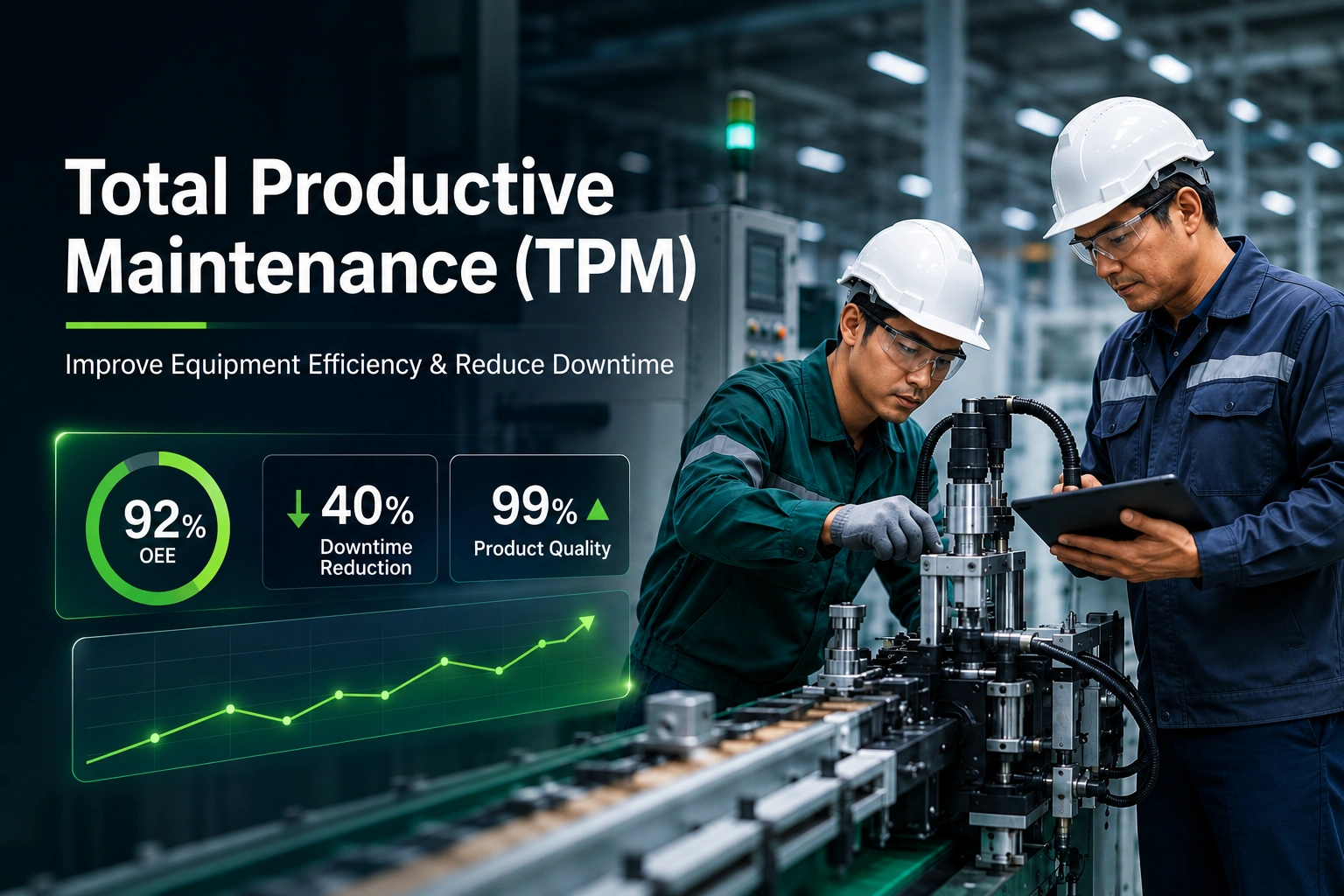
2. Predictive Maintenance
AI in ERP simplifies equipment management through predictive maintenance, ensuring longer asset life and lower repair and maintenance costs. They can compare historical and current data on machine performance and detect anomalies, thereby reducing wear and preventing machine failure. For example, if the system detects a 2% variance in motor heat, it can auto-schedule maintenance, order spare parts, and adjust the production schedule to minimize unplanned downtime.
3. Supply Chain Optimization
Frequent supply chain disruptions are common in the manufacturing industry. The bullwhip effect, due to demand fluctuations and inaccurate demand forecasting, further makes supply chain planning difficult. AI in ERP can analyze data on weather, market trends, and order patterns to make accurate predictions about future demand. Going beyond tier-1 suppliers, it can map risk associated with tier-2, tier-3, and tier-4 suppliers and suggest ways to mitigate supply risks.
4. Inventory Management
Raw material delays often occur due to improper material order timing and quantity. ERP software enabled by AI can track material consumption & demand in real time, enabling better material requirements planning and automatic safety stock adjustments. This helps to maintain adequate stock levels across warehouses, reducing overstocking or stock-out situations. AI-led ERP also minimizes dead stock by actively predicting slow-moving stock before it becomes a liability.
5. Quality Excellence
AI-driven ERP software solutions can support root cause analysis for better quality control. For example, real-time production data analysis can highlight risky batches and point out problems with a particular machine setting or shift operator. In fast-moving manufacturing environments where computerized AI vision and image-based systems are deployed for inspecting parts, ERP solutions with AI-based analysis allow faster detection of microdefects.
6. Procurement Automation
AI can help you predict vendor lead time and enable automatic stock reordering, thereby improving order fulfillment rates with minimal human intervention. These high-powered ERP systems can intelligently monitor billing transactions for unusual patterns. By continually learning from past data, they become more intelligent at identifying fraudulent and incorrect invoices and preventing wrongful payments to vendors.
7. Conversational Queries
Another area where AI in ERP is making rapid advancement is natural language processing and generative AI, allowing users to ask questions to chatbots and get quick answers to complex queries. This significantly reduces the time spent on navigating layers of data and reports, improving employee productivity and customer service. For example, AI chatbots can predict which vendors are likely to miss delivery deadlines during high seasonal demand, and suggest better alternatives to fulfill demand.
What Are the Challenges to AI Adoption in Manufacturing Software?
While the integration of AI in manufacturing ERP software is breaking all barriers in improving efficiency, concerns around the use of AI remain. Many manufacturers are not sure if they can trust AI, especially the software that uses generalized AI models without adapting to specific business requirements. Even more concerning are AI hallucinations, wherein AI generates non-verified, factually incorrect, or nonsensical answers. Apart from that, there are also issues related to biased responses as well as concerns about data security and privacy. In addressing these challenges, responsible manufacturing software solution providers are continuously upgrading their AI innovations and making them more precisely aligned with business expectations.
AI-Powered ERP Trends in Manufacturing
Artificial intelligence and ERP software have together unlocked newer capabilities for manufacturing. Some trends that will shape the future of AI-enabled ERP solutions are as follows:
- Explainable AI – To build trust in AI models, users will seek logical explanations behind AI responses.
- Hyperautomation – Merging AI tools and data warehouses in ERP for rapid automation of specific business processes.
- Augmented Intelligence – Positioning AI as an enabler that complements human intelligence.
- Chatbots & Virtual Assistants – Getting instant answers and support for advanced queries through AI assistants like Sage Copilot.
- Blockchain & AI Integration – Leveraging blockchain to enhance data security and ensure immutable audit trails for compliance.
Conclusion
AI-powered ERP software is improving manufacturing workflows through widespread applications across production, quality control, supply chain, and asset management – ultimately driving greater efficiency, profitability, and customer satisfaction.
Sage X3 is a future-ready ERP software for manufacturing, with robust AI capabilities to automate manufacturing processes and accelerate decision-making. Keeping innovation at the forefront, Sage X3 ERP offers hyper-customized intelligent solutions to power smart factories.