What is ERP for Retail Industry?
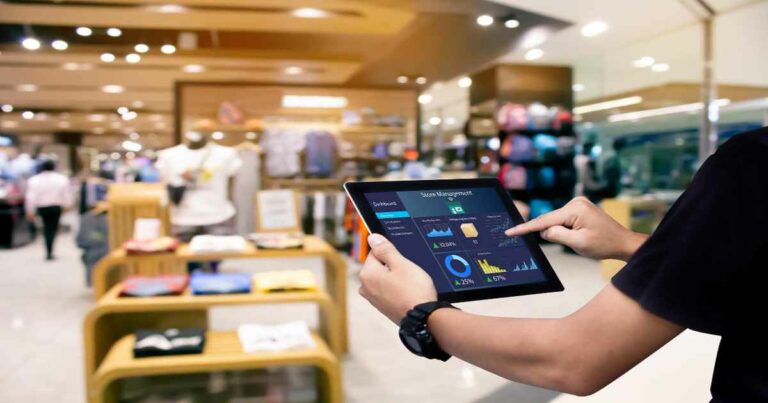
Retail ERP software is an integrated solution for omnichannel retailers that provides inventory & warehouse capabilities, Point of Sale (POS) & e-commerce integration, order tracking, customer data analysis, automated billing, demand analysis, and complete financial visibility.
ERP software offers a cloud-based system that brings efficiency in the retail business operations, reduces carrying costs, and provides a seamless experience to their customers across physical stores, mobile apps, websites, and social media. In today’s highly customer-centric environment, retailers are leveraging new technological solutions to automate front-end and back-office operations, mitigate common challenges, and improve their competitiveness.
Overview of the Indian Retail Industry
India’s retail industry was about $1,124.2 billion in size in 2025. It is projected to reach $3,505.4 billion by 2034, with a 12.80% CAGR growth during the forecast period, according to a report published by the IMARC Group. India’s retail sector makes a significant contribution to the country’s economy, supporting over 50 million jobs and accounting for 10% of India’s GDP.
Over the past few years, the retail sector has witnessed sustained, consumer-led growth amid rising Indian disposable incomes, the simplification of GST taxes, and improvements in Ease of Doing Business. Moreover, the Government of India is expected to lay down a National Retail Policy to support the growth and digitization of retailers in the MSME sector.
→Intense Competition
India has had a boom in attracting global brands due to various factors, such as ease of doing business, enormous purchasing power, and high spending capacity. As a result, Indian retail companies have to compete with not only domestic brands but also global brands.
→Rising Real Estate Costs
In India, there is a significant increase in the demand for commercial real estate properties in prime locations. As a result, retail companies face challenges finding affordable retail properties or rental spaces in highly populated areas. Ultimately, it results in their profitability.
→Counterfeit Products
In India, many customers are tricked into purchasing substandard and defective counterfeit products. As a result, retail companies not only lose out on potential sales but also suffer reputational damage. Sometimes, such unethical attacks are manufactured by powerful competitors.
→Poor Road Conditions
India’s road network is the second-largest in the world. However, it largely suffers from poor-quality roads, construction materials, and a lack of maintenance. This adds up to transportation costs for retail businesses, delays the shipment of products, and degrades the customer experience.
→Cultural and Linguistic Diversity
Indian culture is so diverse. India has a rich legacy of diversity with hundreds of thousands of languages, some of which date back thousands of years. Retail marketers often face linguistic challenges while communicating with customers, delivering marketing and promotional materials, and following up on customer complaints.
→Changing Consumer Demands
Changing consumer demands can have both positive and negative impacts on businesses. If a retail business is not able to keep up with the pace of change, it risks losing new opportunities, sales, and profitability.
→Limited Adoption of E-Commerce Solutions
In today’s age of digitization, a strong focus on e-commerce is a must. However, some retail companies lack innovativeness and fail to adapt to the new changes. As a result, they face intense competition from giant e-commerce solutions and lose their customer base.
You may also like : Best Sales Management System To Up Your Sales
Benefits of ERP Software for Retail Industry
• Superior Customer Service
Retail ERP software provides customer relationship management (CRM) features. It builds a centralized database consisting of a multitude of useful data about customer profiles, purchase histories, complaints, past conversations, and contact details. This vital information helps retail businesses provide superior customer service, efficiently handle complaints, and provide a personalized experience.
• Strong Data-driven Decision Making
Data-driven decision-making is a necessity for modern businesses. Enterprise Resource Planning software for retail provides reliable insights into business data through automatically curated reports, which aid in accurate forecasting of sales and market trends and allow you to take strongly data-backed decisions with greater confidence.
• E-Commerce Integration
Retail ERP software provides seamless integration with e-commerce tools to provide real-time information about online orders, boost conversions, reduce manual errors, and increase profits.
• Sales Forecasting and Planning
Sales Management ERP collects data from all departments and provides a complete picture of demand for products and services. It analyzes historical trends and patterns to forecast sales and develop targeted marketing campaigns.
• Efficient Supply Chain Management
Retail ERP software provides end-to-end visibility throughout the supply chain management process. As a result, retail businesses handle the procurement and delivery of goods more efficiently. It makes them more scalable, efficient, and responsive.
• Audit-friendly Financial Reports
Manual data entry can be riddled with so many errors during financial management. ERP software for retail automates financial management, report generation, and human errors. It makes your data transparent, audit-friendly, and consistent across all stores and entities.
• Effective Vendor Management
Retail ERP software makes the procurement process easier. Once businesses build a list of suppliers based on their location and product features, they can define automated purchase approvals based on different price levels.
When is the Right Time to Implement Retail ERP?
There is no one-size-fits-all answer. The right time to implement retail ERP software will depend on a number of factors. Here are some of the important ones:
- The size of your business is growing and you’re facing operational issues
- Your customer database is consistently growing and your marketing team is unable to keep track of it
- Your business is suffering from bureaucracy problem due to sheer amount of paperwork
- Your employees lack the right tools to automate repetitive tasks.
- Your customers are complaining delays in addressing complaints
- Manual data analysis and report generation activities are wasting a lot of your precious time
Key Modules of Retail ERP Software
» Distributed Warehouse Management
Retail ERP software has a Warehouse Management System built in. It manages inward and outward processes, billing, and enables retail businesses to efficiently transfer stocks internally.
» Centralized Order Tracking
Order management becomes easier with ERP. A centralized order tracking system simplifies the difficult task of tracking orders across multiple stores. It provides accurate inventory data, helps retailers detect and prevent fraud, and ensures orders are fulfilled on time.
» Discount Management
Providing unreasonably higher discounts can lead to low profit margins, while unreasonably lower discounts can lead to ineffective advertising campaigns. The discount management module helps in lead generation, price negotiation, couponing, and management, thereby helping meet the sales targets.
» Returns Management
Retail ERP software provides a flexible system to manage returns, make returned products available for resale or refurbishment, and take action on defective products.
» Vendor Management
Vendor Management is a key module in retail ERP software that provides various features to reduce vendor-specific risks, minimize procurement costs, negotiate with vendors, and conduct vendor-specific performance analysis.
» Human Resource Management
The HR Management module in retail ERP software lets retail businesses track employee performance, manage employee attendance, timesheets, payroll, and various other HR functions.
» Risk Management
This module enables businesses to identify critical risks, measure potential impacts, and implement integrated risk management practices to address them.
Steps for Implementing Retail ERP Software
⇒Conduct a Thorough Needs Assessment
In order to get the most out of the system, you will need to plan out and identify areas of inefficiency. You will need to determine which specific ERP modules or functionalities you will need to address those inefficiencies.
⇒Choose an ERP that Aligns with Your Requirements
Choosing the right retail ERP software is a crucial step in taking your business to the next level. You will need to take a deep dive into its operations, compare its alternatives, evaluate its limitations, and check whether it aligns with your company’s requirements, goals, and budget.
⇒Develop a comprehensive implementation plan.
Sage X3 ERP is a complex system because it integrates with many functions across your business. If you don’t develop a comprehensive plan before ERP implementation, your business can run into implementation errors, delays, data accessibility issues, system downtimes, and missed sales opportunities.
⇒Plan ERP Customization
Customizing retail ERP software can help your business in numerous ways. It will provide you with a higher level of control over business operations, ensure steady workflow, reduce costs, and adjust to integrate with third-party solutions.
⇒Test and Validate the New System.
Your business has invested a significant amount of time, money, and resources in the best ERP. In order to ensure your new system is functioning correctly, you will need to test and validate it. It will help you identify operational errors before the full launch.
⇒Employee Training
Training your employees to handle the new retail ERP systems will help them become more productive and complete tasks more quickly. It will help them adapt to the new changes and align with your company’s strategic goals and visions. Keep in mind that a lack of training for your employees can lead to the tool’s unused potential and hinder your retail ERP software from reaching its full potential.
⇒Go Live
After testing and validating your new system, you can go live. It is an exciting opportunity for your business to revamp its existing processes.
⇒Consistently Monitor the System
Now that your system is live, it is equally important to consistently monitor it for performance, errors, and security issues.
Transform Your Retail Business with Sage X3
ERP Retail Software is an all-inclusive retail Business Management Software for your retail business. It delivers a faster, more instinctive, and personalized experience and provides end-to-end vision across your different business operations. Whether you’re running multiple retail outlets across different locations or dealing with prices in multiple currencies, it will provide powerful sorting, filtering, querying, and analytical features without toggling between various software. Your business can proactively respond to any market change and drive operational performance going forward.
One of such robust ERP systems are SAGE X3 & SAGE 300, which meets all the demands of the modern retail industry and also provides customizable services according to the company requirements.

Frequently Asked Questions (FAQs)
1. What is a retail ERP?
ERP for retail industry is an integrated solution that streamlines various retail operations such as billing, accounting, order processing, and customer support. It empowers retailers with intelligent business analytics, precision in inventory tracking, and better sales forecasting accuracy.
2. Which is the best Retail ERP Software India?
Sage X3 is the best retail ERP software India that allows retailers to grow faster and reduce their operational complexities. It allows retailers to maintain a centralized record of their diverse range of products, manage product expiration, and enhance the customer’s shopping experience. It delivers custom reports and interactive dashboards to help you with strategic planning and smart decision-making.
3. What are the top features of retail ERP systems?
Here are the top features of ERP for retail industry:
- Customizability: It is highly customizable so that you can align it with your industry needs
- Point of Sale (PoS): Integrated barcode scanning, promotions & discount management, and payment gateways
- CRM: Built-in CRM system to track customer orders, manage returns, and campaign management.
- Supply Chain Management: End-to-end supply chain and logistics management for optimized delivery time and improved efficiency.
- Multi-channel Integration: Integrate your retail ERP with multiple systems, including e-commerce platforms, for a seamless customer experience.
4. Why Should You Use Retail ERP Software?
ERP implementation can benefit retail businesses in numerous ways. It can improve operational efficiency and consolidate data from multiple departments and stores. This enables businesses to get real-time visibility into critical business data, prevent stockouts, and aid in decision-making.
- Minimize holding costs
- Monitor sales patterns
- Forecast demands
- Optimize inventory levels
- Integrate sales channels
- Make informed decisions