What is ERP Software for Supermarket?
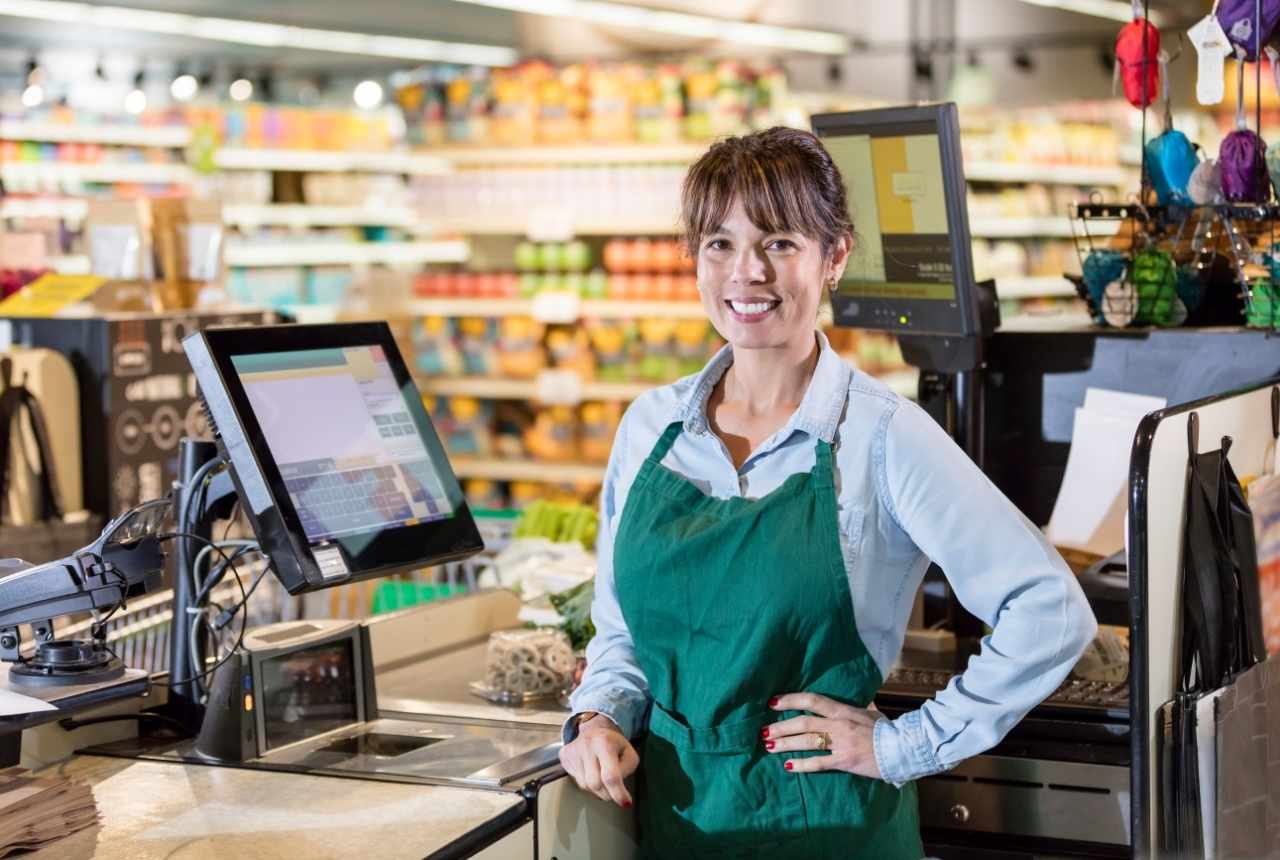
ERP software for supermarket is an all-inclusive fully integrated software solution that streamlines multiple disparate systems into a single platform and optimizes various business processes from purchases, sales, stock management, Point of Sale, payment processing, and lead management, to financial management. It is a highly adaptable solution transforming the retail industry in India and throughout the world by helping owners get intelligent analytical reports, up-to-the-minute access to authentic information, and control over their business operations.
ERP software keeps the supermarkets resilient in the face of the modern business landscape with ever-increasing competition, innovation, automation, and growth. It comprises a wide variety of modules tailored to the specific needs of the supermarkets that ease the complexities involved in managing a supermarket, overseeing inventories, and other business operations.
Overview of the Indian Supermarket Industry
The Indian grocery market is estimated to grow by $404.6 billion during the period of 2025-2030, accelerating at a CAGR of 9%, according to a report published by Research and Markets. As India’s middle class expands, so does the demand for supermarkets. Indian supermarkets offer a clean & organized environment and self-service layouts, which are increasingly preferred by the modern Indian customers. Also, the digital integration, particularly the availability of mobile apps, has boosted customer experience and contributed to the growth of the supermarket industry.
You May Also Like: How ERP Software improves Inventory Management System?
Challenges Faced by the Supermarket Industry
- Limited Visibility into Inventory
Supermarkets have to maintain a large stock of inventory to meet the specific needs of their customers and changing market scenarios. The success of their business depends on how efficiently they manage their inventory. However, managing inventory can be a complex task. Poor inventory management can lead to delays in operations, negative customer experience, and increased costs.
- Redundant Manual Processes
Many supermarkets throughout India still rely on manual processes during inventory management, payment processing (checkout), and customer service. The lack of automation in business processes is one of the major factors that lead to human errors, inefficiencies, increased costs, and delays.
- Transportation & Logistical Roadblocks
India’s pothole problem is a major issue that not only impacts the lives of Indians but also leads to transportation and logistical roadblocks during the home delivery of goods. Roads in India are poor in quality, and prone to accidents and landslides. Besides being a major cause of severe injuries and deaths, poor road condition often results in delays in transportation, damage to goods, and unexpected losses.
- Rise of E-Commerce
In today’s fast-paced world, the consumer lifestyle and demands have undergone tremendous changes. An increasing number of tech-savvy young generation prefer e-commerce platforms and opt for doorstep delivery of goods, such as groceries, fresh produce, and dairy products, among others. E-commerce platforms provide cheap products at discounted rates due to their lower operational costs.
- Increased Competition & Slim Profit Margins
Being a lucrative sector, the Indian retail sector attracts both domestic and international companies. With increasing competition, supermarkets have to squeeze every drop of their resources and focus on product branding, customer outreach, and various forms of advertisements (billboards, TV, print, online, and social media), all of which require a significant investment. They also have to offer competitive prices which reduces the profit margins.
- Employee & Operational Costs
Employee Cost is a wider term that includes various costs incurred by businesses as part of employee compensation and benefits. Typically, a large number of employees are employed in supermarkets which increases the employee costs. Besides, the business incurs various operational costs such as rent, advertising and marketing, electricity, and water.

Future Trends in the Supermarket Industry
- Omnichannel Retailing
Omnichannel retailing allows customers to interact with multiple sales channels all at once as they move between each channel. It provides a single, unified, and consistent experience. Omnichannel retailing enables brands to engage with potential customers, get their feedback in real time, and offer a higher value for their products.
- Personalized Shopping
An increasing number of supermarkets throughout India are using data and analytics to provide personalized experiences to customers such as targeted recommendations through emails and SMS, discounts, and loyalty programs.
- Eco-friendly Packaging
An increasing number of businesses across India, including supermarkets, are recognizing the visual effects of climate change, and waste generation. Many supermarkets are offering products in eco-friendly, and recyclable packaging to reduce waste and environmental effects.
You May Also Like: What are the main Features of Supply Chain Management?
Benefits of ERP Software for Supermarket
- Manage Sudden Surges & Drops in Demand
Supermarket ERP provides access to cutting-edge technology and forecasting tools that analyze market demand, changing trends, and historical data, and precisely forecast surges and drops. The Inventory Management System helps reduce discrepancies, inconsistencies, and risks involved in the traditional process of inventory management. It allows supermarkets to make informed decisions that synchronize with all sales channels throughout different branches, and achieve higher customer satisfaction.
- Traffic Prediction & Route Planning
Retail ERP software enables supermarkets to reap the benefits of automation in the transportation activity and fast race to get goods delivered. For example, retail ERP software offers Supply Chain Management Tools, and integration with Internet of Things (IoT) devices which reduces transportation delays, and higher fuel costs by providing route strategies, and real-time insights about traffic and weather forecasts.
- Integration with the Point of Sale (PoS) System
Supermarket software offers close integration with the Point of Sale (PoS) system that enables real-time recording and tracking of transactions, customer orders, discounts, invoices, purchase history, and multiple payment methods. With POS software, businesses gain immediate access to real-time information, and handling omnichannel sales becomes easier than ever.
- Returns Management
The returns management process starts when a dissatisfied customer follows the set of procedures to return the product and asks for money back. A customer may return their product due to many reasons including defective product, damaged product, incorrect product, and so on. The best ERP software in India makes return management a seamless process with closer integration with the order and invoice data. Supermarket software allows easier tracking and management of returned orders.
- Season-wise Food Storage And Classification
Supermarkets offer a wide variety of products to their customers, many of which are perishable food items. Season-wise classification of food products is a crucial activity to reduce wastage. Grocery ERP system provides a season-wise food classification to keep them in optimal condition, maintain their flavor and freshness, and boost sales.
- Strengthened Regulatory Compliance
Regulatory compliance in India is often a time-consuming, error-prone, and resource-intensive process. ERP system for grocery stores provides a unified system that automates various compliance processes so that your business adheres to local laws and regulations. Billing software reduces the likelihood of lawsuits, fines, and penalties.
- Manage Comprehensive Accounting & Financial Needs
Supermarket billing software allows your retail business to assign different financial resources for different business activities such as purchases, supply chains, customer support, and manage payments to different stakeholders such as vendors, employees, and customers. Drawing budgets, managing receivables/ payables, eliminating duplicates, and providing precise, dependable information can be accomplished with a single system in the supermarket software. The Accounts Receivable Automation improves cash flow, decreases customer churn, and facilitates automated invoice reminders and collection emails.
- Centralized Customer Management
Maintaining strong customer relationships, and identifying new sales opportunities, are imperative not just for supermarkets, but also for any other industry. Supermarket billing software serves as a central repository of customer data, which serves various activities such as lead generation, cross-sales, upsells, and personalized customer support. Retail ERP software allows you to effectively manage the entire customer lifecycle.
Future-proof Your Supermarket Business with Sage X3
ERP allows supermarkets to get a holistic view of business information, manage a vast array of stock products, keep track of perishable items, cater to diverse consumer needs, fix logistics issues, and achieve sustainable growth.
Sage X3 is a multi-language, multi-currency ready-fit solution that empowers modern supermarkets with intelligently crafted analytical reports, customized dashboards, and other powerful tools to mitigate various retail business challenges, drive down administrative costs, and stay ahead of competitors. It provides a unified system that consolidates various processes so that your business can focus on fast-paced operations, meet evolving market needs, and run like a well-oiled machine.
Frequently Asked Questions (FAQs)
1. What is Supermarket ERP?
Supermarket ERP is a future-proof solution that automates business-critical processes and facilitates insightful reports & customized dashboards for better decision-making. It provides a diverse range of modules to transform traditional business processes and improve competitiveness.
2. What are the key benefits of deploying a Grocery ERP?
Here’s why grocery stores across the world are deploying a Grocery ERP System:
- Run your business without being physically present in the store, thanks to cloud ERP
- Automate the billing procedure, prevent long billing queues, reduce human errors, and improve customer experience
- Handle multiple batches of inventory with a single, unified interface
- Accurately track and manage items with robust Barcode & QR code integration
- Streamline accounting and financial management for better audit-readiness
3. What are the essential modules to look for in supermarket ERP software?
Here are the most essential modules to look for in your new supermarket ERP system:
- POS & Billing: Faster transactions, accurate billing, and barcode integration.
- Multi-store Management: Track stock levels across multiple outlets and manage inter-store transfers using a single interface
- Inventory Management: Automate inventory tracking, improve product availability, reduce carrying costs, and accelerate fulfilment.
- CRM: Improve customer relationships through faster order tracking and ticket management.
- Financial Management: Improve accounting accuracy, optimize cash flow, and maintain audit trails.