Best ERP for Food Industry in India
Optimize, grow & thrive your food business with robust Quality Control, Shelf-life, and Recipe Management features of ERP for Food Industry
What is ERP for Food Industry?
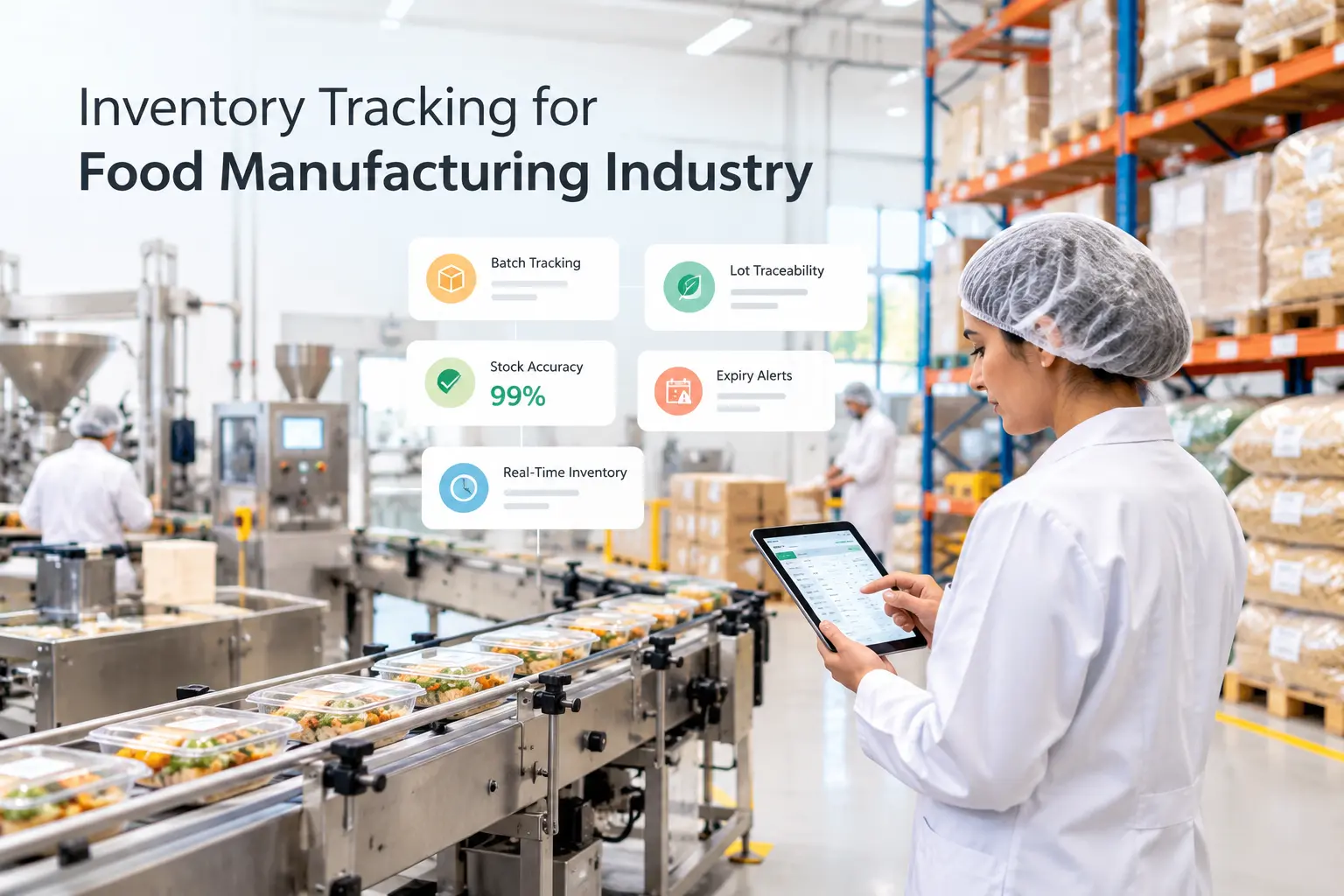
ERP for Food industry is a specialized software with industry-specific capabilities like recipe management, shelf-life management, batch traceability, and comprehensive demand planning. It is a business-critical solution that enables the delivery of fresher & quality products to your customers, crucial in today’s highly competitive food industry.
ERP software automates and standardizes various aspects of the food business. It helps you optimize production scheduling, manage inventory, reduce waste, and track allergens while ensuring you meet multiple regulatory & food safety compliance requirements. Food ERP enables you to have greater control over operations and adjust quickly to changing market dynamics.
Decoding the Growth of India's Food Industry
India’s food manufacturing and processing industry is a key pillar of India’s economic growth, creating vast opportunities for market expansion, startups, employment, and value addition. The food processing market in India is projected to reach US$ 700 billion by 2030 and surpass US$1100 billion by 2035, according to PHDCCI.
The major drivers of the Indian food processing sector are changing consumption patterns, rapid urbanization, export growth, a strong raw material base, and favorable government schemes such as PLI, PMKSY, and 100% FDI incentives, which boost investment, innovation, and infrastructure.
Key Features of Food ERP Software
ERP for food and beverage industry provides integrated tools for managing complex food formulas, mitigating inventory-specific challenges, analyzing demand patterns, enhancing customer experience, and managing vendor relationships. Here are its key features:
Here’s what you can expect from an ERP:
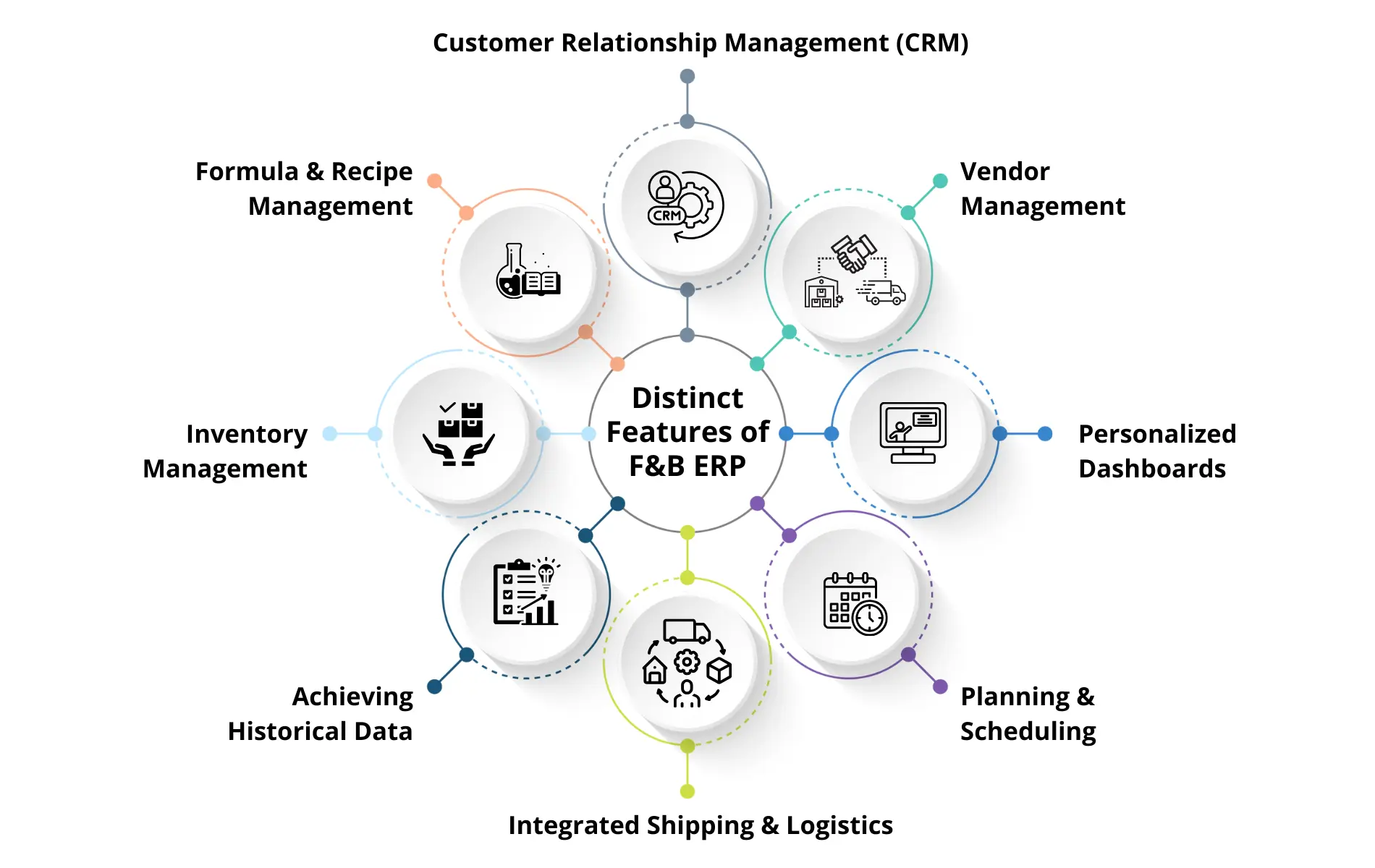
1. Customer Relationship Management (CRM)
Sage X3 is the best ERP for food industry. It has an inbuilt Customer Relationship Management (CRM) module that serves every need of activities including lead management, prospect management, tasks management, and more.
With this ERP for food and beverage Industry, you can develop strong relationships with external partners to enhance productivity as well as responsiveness. This finally results in enhanced customer satisfaction.
2. Formula & Recipe Management
Sage X3 ERP software for food industry has brilliant features like easy operations management, product configurator, and BOM. They provide well-managed recipe and formula systems through integrated manufacturing modules.
Also, an enterprise resource planning system for food offers real-time data to customers with increased productivity and high efficiency of production activities.
ERP for food and beverage is a highly configurable system that enables tight quality controls, and consistency in the taste and quality of the food at all times.
3. Inventory Management
Sage X3 food ERP software assists in carrying out essential functionalities for inventory management. The food beverage ERP software helps with maximizing cost-effectiveness, reducing waste, efficacious warehouse management, supply chain management, and aiding businesses to gain optimum productivity. Maintaining optimum inventory levels is crucial to ensure sufficient working capital and prevent excess capital from being tied up unnecessarily. Your business can maintain a positive cash flow, and avoid stockouts & excessive stock.
4. Achieving Historical Data
Archiving and tracking historical data of the business helps attain clear and realistic information about the business partners, sales patterns, marketing strategies, and product pricing strategies.
Sage X3 software for food and beverage industry is the most comprehensive platform that offers tools that fulfill these needs appropriately.
5. Logistics Management
Sage X3 for food beverages has an excellent shipping management module. The food industry ERP software offers real-time data about freight and carrier details, preparation lists, packaging, route information, and more
With a beverage ERP, your business gains operational fluency in the cumbersome task of shipping and logistics. Not just that, ERP for food processing industry empowers businesses with automated billing & invoice generations, optimizing the physical movement of food products to save time, and money and yield higher Return on Investment (ROI).
6. Planning & Scheduling
Sage X3 ERP system offers MPS (Master Production Schedule) as well as MRP tools in order to address the requirements for labor, raw materials, and resources.
The ERP software for food distributors offers accurate results that are critical to lowering waste, reducing production time, and assisting the management in making dynamic decisions. Food manufacturing ERP provides crucial tools for determining warehouse needs, demand patterns, sales forecasting, staffing, and budgeting.
Also, forecasting offers historical data and Sage X3 assists in forecasting lead times, maintaining accuracy in purchasing calendars, enhancing scheduling, reducing losses, predicting inventory information for every department, etc.
7. Personalized Dashboards
Sage X3 food beverage ERP offers brilliant features of dashboards as well as process visuals that offer similar summaries and essential information to higher management.
The best ERP software for food manufacturing helps them make quick and effective decisions. With access to the right tools, your business gains a competitive advantage in the market.
8. Vendor Management
Vendor Management empowers your company with the ability to manage vendors, track vendor performance, and automate the Purchase Order (PO) generation. It helps you maintain good relationships with your vendors and ensure a continuous supply of raw materials for smooth production activity.
With a dedicated Vendor Management module, you will be able to get a better risk assessment of your vendors based on their previous performance and build their up-to-date risk profile. Your company will benefit from a continuous supply of high-quality goods.
Sage X3 encompasses these features to help you meet your evolving consumer & regulatory requirements and avoid complexities in everyday business operations.
Must-have Modules of ERP for Food Industry
ERP consists of a variety of modules designed to address specific business functions. Here are the core modules of Food ERP Software:
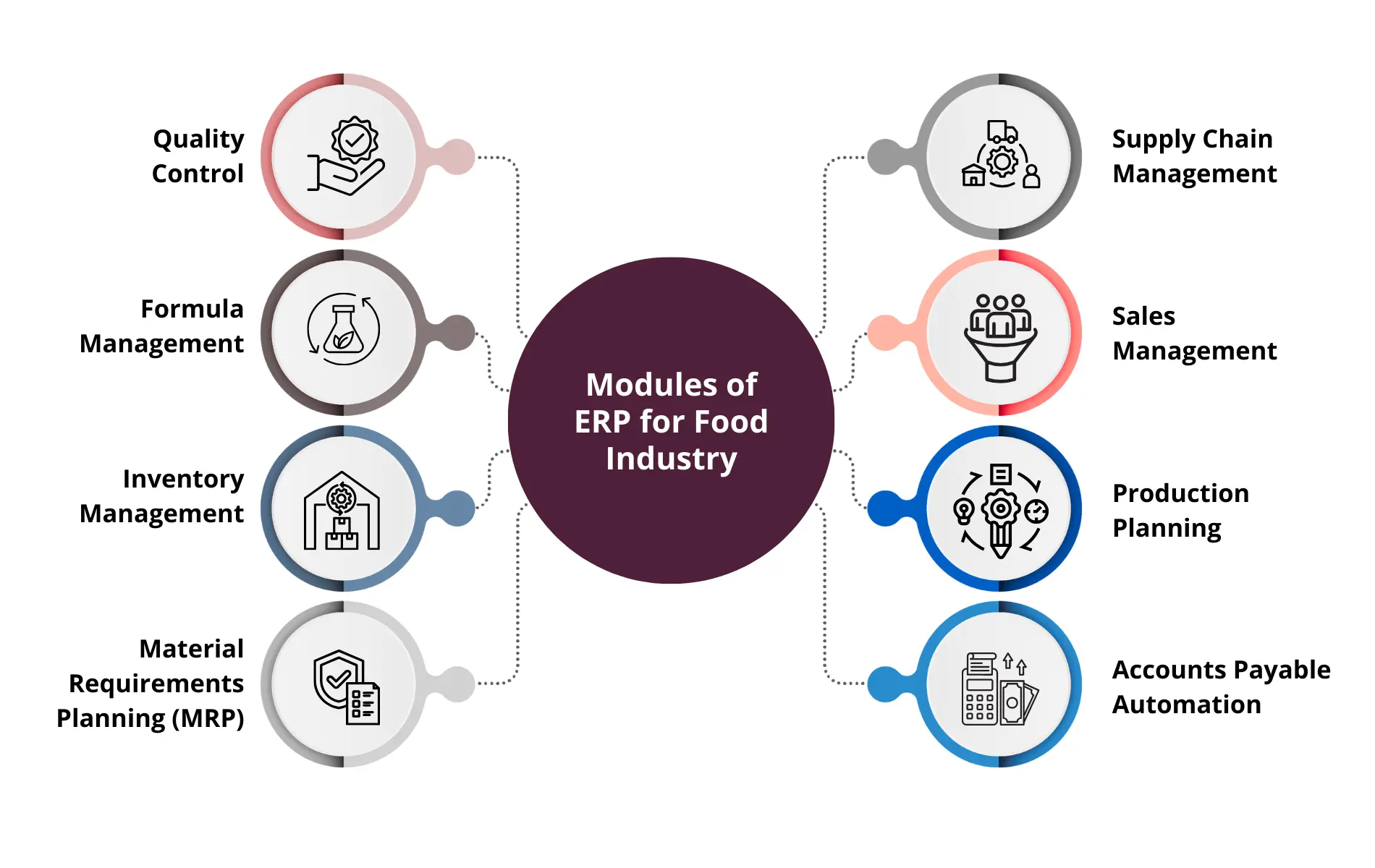
1. Quality Control
Food companies have to comply with various safety standards to ensure that food products are safe for human consumption. The Quality Control module provides robust quality control across different areas of the manufacturing process and generates automated alerts whenever ingredients are near their expiry dates.
2. Formula Management
In today’s era when businesses offer a diverse range of products catering to different customer segments, manually managing food formulas can be a time-consuming and complex task. ERP takes care of everything from ingredient measurement, formula sizing, and formula approval, among others.
3. Inventory Management
The Inventory Management System in ERP makes it easier to manage perishable food products with limited shelf value. It automatically checks the inventory threshold, and ensures you never run out of stock. Eventually, it helps you save inventory storage costs, and gain agility in the business operations.
4. Material Requirements Planning (MRP)
The Material Requirements Planning (MRP) module plays an important role in ensuring continuity in production operations, prioritizing & scheduling production processes, optimizing production resources, and ensuring timely delivery to the customers.
5. Supply Chain Management
In today’s era, when businesses have to adhere to strong regulatory standards, Supply Chain Management in ERP plays an important role. It provides end-to-end traceability into the production process right from the procurement of raw materials to their delivery to the final consumer. Higher transparency in the movement of goods also aids product recall operations.
6. Sales Management
The Sales Management System in your ERP provides your organization with complete control over the sales operations from maintaining extensive records of sales operations, and generating invoices & quotes, to tracking leads.
7. Production Planning
ERP equips your company with powerful production planning & scheduling features that result in continuous production activity, reduced downtimes, and improve your ability to meet market expectations.
8. Accounts Payable Automation
As your business grows in size, you will need a flexible AP Automation system that will automate invoice routing, data extracting, and data validating. Automating accounts payable will allow you to benefit from better fraud protection, collaborate with global teams, and make timely payments to your suppliers.
Why Your Food Industry Needs Sage ERP Software?
Sage ERP is a leader in India’s food manufacturing industry, known for fueling innovation, growth, and excellence. It empowers your business with advanced production planning & scheduling, powerful demand forecasting, predictive analytics, and financial automation. This best-in-class ERP for food industry enables decision-makers to monitor business activities, identify trends & patterns, and gain business-critical insights at their fingertips.
Here’s why leading food manufacturers across India prefer Sage X3:
- Automated alerts for food expiration, allergen tracking, and comprehensive recall management
- Gain an edge over your competitors with real-time reporting, predictive analytics, and data visualization
- Reduce online ordering complexities and provide a seamless customer experience with end-to-end e-commerce integration
- Streamline financial processes, avoid human errors, and stay compliant with regulatory requirements
- Build strategies to achieve sustainable growth in today’s increasingly complex and competitive environment
Core Benefits of ERP for Food and Beverage Industry
Here’s how your organization will benefit from the innumerable benefits of the ERP for Food and Beverage Industry:
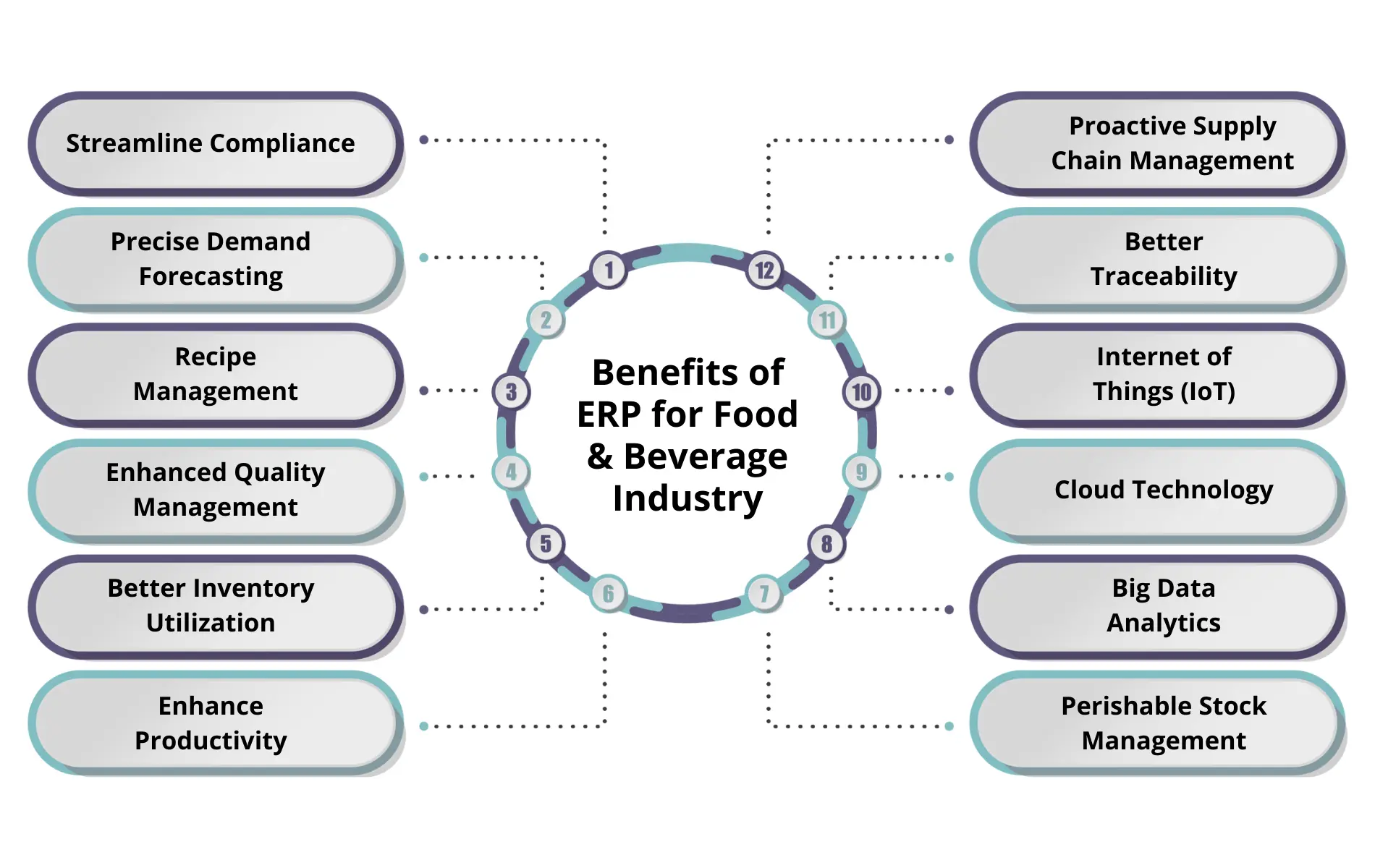
1. Streamline Compliance
Sage X3 enterprise resource planning is the ERP for food and beverage Industry that assists in faster compliance to help you grow your company.
The ERP food software has robust functionality that aids companies in streamlining their compliance while reducing inefficiency. It is the biggest plus point over other basic ERPs.
2. Precisely Forecast Demand
With Sage X3 ERP software, you can accurately prodigy the seasonal changes in supply and demand. This way, you can stock up as well as sell out products/services as per the needs. Sage X3, an enterprise resource planning software, offers you the ultimate intelligence in a customizable and simple interface.
3. Recipe Management
Optimize and predict varied outputs of the production job by comparing planned inputs and outputs. Use these values in the formula or recipe to start the production job through the food & beverage manufacturing ERP software.
4. Enhanced Quality Management
Food production ERP provides robust quality control mechanisms to assess the quality of your products using a plethora of information. Manage and monitor quality specifications while also testing results for raw materials, finished goods, and intermediates at different stages in the life cycle with the ERP for food and beverage Industry.
5. Better Inventory Utilization
Remove inefficiencies and manage inventory levels with incessant integration of your warehouse management. Also, reduce the inventory write-offs ( use-by-date, expiration date, etc).
6. Enhance Productivity
With Sage X3 cloud based ERP system you can compare loads on different work centers created by existing as well as proposed work orders. Also, monitor the load capacity of every work center to improve inventory levels and customer service for your business with the food processing ERP software.
7. Proactive Supply Chain Management
Sage X3 ERP software has an allergens function while allowing tracking of manufactured products. You can improve food safety along with sturdy traceability. This makes sure that you understand the ingredients’ source along with the pressures that might impact suppliers during changes in the food supply.
8. Better Traceability
There exist a number of advanced technologies that will allow your food and beverage companies to log in product and transactional information. However, the data that comes out of this information lies at the heart of traceability. Let us learn different ways to gain traceability for food beverage as a business goal.
9. Internet of Things (IoT)
With the Internet of Things, devices can get connected at any time and anywhere. Through the latest labeling technology like RFID and QR codes, accessing data becomes convenient. The data can help track the complete journey of products via the supply chain. With the ERP system, anything can be tracked and recorded right from the temperature during the transport of the products to the main resource of ingredients.
10. Cloud Technology
Today, with the advancement in technology, food and beverage companies can leverage cloud technologies. Cloud technology has varied managing aspects such as operating systems, databases, applications, and system infrastructure.
The cloud-based ERP saves a huge time and cost for your company while allowing you to focus more on crucial operations.
11. Big Data Analytics
Big data analytics helps to identify the issue in the process while stopping it from getting spread in the supply chain. In the case of potential rises, and unplanned events like contaminated products found in the supply chain, you can track and identify everything to get accurate solutions.
12. Perishable Stock Management
The inability to manage perishable food products can lead to wastage and additional production & storage costs. ERP for food industry comes to the rescue of food vendors who always struggle to keep their food fresh & eatable by providing them with superior Predictive Stock Management capabilities. They can leverage Batch Tracking, First-in-First-out (FIFO method), Last-In-First-Outand (LIFO method), and various other technologies.
Who Benefits Most from Food ERP Software?
Different business segments within the food industry benefit from the Food ERP 2.0. Here are the examples:
1. Food Manufacturers and Processors
The food and beverage ERP solutions allow dairy processors, bakery product manufacturers, and meat processors to manage their day-to-day activities, track raw materials, optimize production schedules, and ensure adherence to quality standards.
2. Food Distributors and Wholesalers
Wholesale distributors of fruits, vegetables, seafood, and packaged goods use ERP for food industry to manage orders efficiently, integrate with multiple distribution channels, and track inventory.
3. Restaurants and Food Service Chains
Fast-food chains, fine dining restaurants, and catering services use the food ERP system to track costs, manage procurement, forecast demand for their products, and maintain consistency in the quality.
4. Packaged Food and Beverage Producers
Manufacturers of snacks, frozen foods, bottled beverages, ready-to-eat meals, and canned goods use the food ERP system to track production batches, manage food expiration, and streamline distribution.
5. Organic and Specialty Food Producers
Organic food producers, health-focused snack companies, and artisanal food brands use food and beverage ERP solutions for comprehensive ingredient tracking, quality parameter monitoring, and meeting customers’ high expectations.
6. Exporters of Food Products
Leading exporters of spices, tea, coffee, grains, and processed foods use food and beverage ERP software to improve traceability, comply with global food safety & security standards, handle currency variations, and reduce business complexities.
7. Frozen and Perishable Goods Suppliers
Food and beverage ERP systems are increasingly used by suppliers of frozen vegetables, dairy products, seafood, and poultry to manage temperature-controlled storage, fast logistics, and inventory rotation. They aim to reduce spoilage & wastage.
8. Nutritional Supplement Producers
Producers of protein powders, vitamins, and health supplements use a food and beverage ERP software for formulation management, batch tracking, quality testing, and regulatory compliance.
9. Agri-food Companies
Producers and suppliers of grains, spices, oils, and farm-fresh produce use an ERP for comprehensive demand planning, quality assurance, and streamlining their distribution networks.
10. E-commerce Food Retailers
Online grocery stores and direct-to-consumer snack brands use an ERP for smooth order fulfilment, automated inventory replenishment, and providing a seamless experience to customers.
Common Challenges Faced by Food and Beverage Industry
Food companies across India face a multitude of challenges, such as strict regulatory standards, higher delivery costs, frequent disruptions, inventory mismanagement, and increasing competition. Let’s deep dive into each of these challenges:
1. Stringent Regulatory Compliance
Food safety regulations require F&B companies to adhere to strict standards concerning production, packaging, labeling, and distribution. Thankfully, the finance module in ERP helps you meet the latest financial & regulatory standards, ensure operational efficiency, and prevent non-compliance that can result in heavy fines, recalls, or even business closure.
2. Supply Chain Disruptions
Unpredictable supply chain issues, such as transportation delays, ingredient shortages, or logistical challenges, can significantly impact the availability of products. Managing a reliable supply chain that can handle fluctuations in demand and external disruptions, like pandemics or natural disasters, is an ongoing issue.
3. Fluctuating Raw Material Costs
The costs of ingredients like grains, meat, and dairy can vary widely due to factors like weather, political instability, and global demand. This volatility can impact product pricing and profitability, making it difficult to forecast costs accurately and maintain steady profit margins.
4. Waste Management and Sustainability
F&B companies produce significant waste, from raw materials to packaging. Managing waste disposal and adopting sustainable practices are not only crucial for environmental reasons but are increasingly demanded by consumers. Transitioning to eco-friendly practices can be costly and complex. Product life cycle management in ERP can do wonders in managing waste & improving environmental compliance.
5. Rising Competition and Market Saturation
The F&B market is highly competitive, with new brands and products constantly entering the market. Established brands must continually innovate to stay relevant, maintain market share, and appeal to ever-changing consumer preferences.
6. Inventory and Shelf Life Management
Managing inventory, especially for perishable goods, is challenging due to the limited shelf life of products. Ineffective inventory management can lead to increased waste, spoilage, and financial losses, emphasizing the need for accurate demand forecasting.
7. Quality Control and Consistency
Maintaining consistent quality across batches and locations is essential but can be challenging, especially in large-scale production. Inconsistencies can arise from differences in ingredient quality, processing conditions, or human error. A Total Quality Management solution should help address this issue.
Sage X3 helps you mitigate the above challenges and respond quickly to ever-changing market circumstances.
How to Choose the Best Food ERP Software for Your Business
Choose a food ERP system that is flexible & customizable, prioritizes UX, provides industry-specific features, and supports third-party integration. Here’s more in detail:
1. Industry-specific Capabilities
Determine the functional needs of your organization, and look for the areas that require improvement. Compare different ERP solutions available on the market, and shortlist the ones offering the set of capabilities that you may need.
2. Scalability & Customizability
There are times when you need to customize the food and beverage ERP software to improve user adoption, make things simple for your employees, and get deeper integration with your existing legacy systems. Similarly, make sure your ERP is flexible to meet your increasing business needs to avoid potential delays & inefficiencies.
3. Prioritize User Interface (UX)
An ERP implementation can only be successful with the adoption of your employees. To ensure successful adoption, you will need to choose an ERP that provides a user-friendly, intuitive interface.
4. Food Safety & Compliance Features
When it comes to the food industry, companies have to take special measures to protect consumer health, prevent contamination, and stay compliant with the ever-evolving food safety standards. Choose an ERP that prioritizes food safety and customer trust.
5. Integration with Third-party Tools
An ERP acts as the central hub that streamlines core business processes. If you’re using a standalone e-commerce app, HR tool, CRM System, or CMMS Software, make sure it can be integrated with them to ensure smooth data transmission, reduced delays, and efficiency in decision-making.
Your Regular Food ERP vs Sage Food ERP 2.0
Here’s what you gain by migrating from your ordinary Food ERP software to Sage Food ERP 2.0:
| Feature | Regular Food ERP | Sage Food ERP 2.0 |
|---|---|---|
| Implementation | Primarily, On-premise | Cloud-first solution |
| Third-party Integration | Limited integration | Supports deep integration with your existing legacy tools, e-commerce platforms, and more. |
| Costs | Higher upfront costs (license fees & hardware upgradation) | SaaS pricing model (Saves high upfront license & upgradation costs) |
| User Experience | Complex (Requires longer training & focus) | Smart, easy & intuitive |
| Business Intelligence | Descriptive | Predictive |
| Traceability | Bi-directional Lot Traceability | Hyper-traceability |
| Data Flow | Syncing of data across different departments occurs in batches at the end of the day, leading to potential delays | Real-time data syncing ensures access to the up-to-the-minute & most accurate information |
Top Industries Leveraging ERP Software
Food & Beverage
Alcohol
Pharmaceuticals
Advertising
IT Services
Furniture
Manufacturing
Auto Ancillary
Pharma Trading
Packaging
Medical Device
Chemical
Plastic
Brewery
Logistics
Automotive
FAQs
What is an ERP system in the food and beverage industry?
ERP is a single integrated solution that lets food and beverage manufacturers oversee their business operations, track expirations, and comply with modern food safety & compliance standards. It is a crucial tool to forecast demand for your products, prevent over-stocking, reduce spoilage, and handle product recalls quickly.
What are the top ERP software in the food industry?
Here are the top food ERP software for your business:
- Sage X3: An all-in-one ERP software with a strong focus on complex formula management, vendor management, expense management, batch production, and food safety & compliance with FSSAI, FDA, FSMA, etc.
- BatchMaster: Provides bi-directional traceability, manages product recalls, and ensures stricter regulatory compliance.
- DEACOM: Batch production management with vendor control capabilities for better quality control and compliance.
- Infor CloudSuite: Tailored for medium and large food enterprises looking for complete data visibility and solid integration with Microsoft tools.
- Microsoft Dynamics 365: A single solution offering shelf-life monitoring, formulation management, batch tracking capabilities, and food safety compliance features.
Why is cloud-based ERP ideal for food manufacturers and distributors?
A cloud-based ERP enables food manufacturers and distributors to improve their operational efficiency by leveraging the power of innovation, cloud, and Software as a Service (SaaS). It provides an integrated platform to manage food formulas, procurement, food deliveries, and customer complaints, eliminating inefficiencies & manual processes across every level.
Why is it important for companies in the food beverages industry to use a Food ERP Software?
Food ERP software empowers food manufacturers with robust planning & forecasting tools, and makes it easier to comply with the ever-changing regulatory standards. It is a comprehensive tool that supports different business processes to maintain consistency in taste, quality, and food safety.
What are the Examples of Food ERP Software ?
Here are the examples of the most popular food ERP software:
- Sage X3: Stay ahead of your competitors with better control over operations, industry-tailored features, quality assurance, intelligent demand planning, and extensive customization.
- BatchMaster: Offers integrated tools for recipe management, nutritional labelling, and bi-directional traceability
- Plex ERP: Manage complex food production processes, improve supply chain, and overwrite disconnected systems.
- Infor ERP: Better manage food safety, manage product recalls, and get cloud integration.
- Microsoft Dynamics 365: Automate core business processes, and ensure quality, consistency & strict adherence to FDA, HACCP, and FSMA standards.
Why is Sage X3 preferred in the F&B industry?
Sage X3 is the most commonly preferred tool in the F&B industry. It is a strategic solution that transforms your traditional business processes so that you can reduce costs, deliver food faster, and improve customer relations. It provides a comprehensive set of features to gain lot & serial traceability, manage product recalls efficiently, minimize food wastage, and prevent supply chain issues.
How Does Sage X3 Transform the Functioning of Food Companies?
Sage X3 is a next-gen food ERP 2.0 that addresses unique challenges faced by the food industry. From tackling food wastage, managing organizational resources, and ensuring quality checks at every level, to financial automation, it is a complete solution to transform your traditional food manufacturing processes.
What are the core features of ERP Software for food and beverage industry?
Here are the core features of the best ERP Software for food and beverage industry:
- Recipe & formula management
- Bi-directional tracking and Lot traceability
- Regulatory compliance and nutritional labelling
- Integrated quality control
- Material Requirements Planning (MRP)
- Master production planning and scheduling
What are the best practices for the Successful Implementation of Food ERP Software?
Here are some best practices to get the best out of your food ERP software and maximize your ROI:
- Coordinate with different teams and assign roles & responsibility
- Develop an implementation roadmap and allocate sufficient budget
- Get access to a range of features by choosing the best ERP software in India
- Don’t go live without thorough planning and testing
- Customize the food ERP software for your unique business requirements
- Collect employee feedback regularly to ensure reliable performance & effcieincy
- Evaluate your performance with the Key Performance Indicators (KPIs)
How does Food ERP improve food traceability & compliance?
Food ERP offers superior batch tracking capabilities, end-to-end documentation, and automated compliance to ensure full regulatory adherence and minimize potential fines & penalties. It helps your business adhere to all the food quality & safety standards with automated quality checks and backward & forward tracing of your produce.