Key Takeaways:
- Financial Accounting is a process of maintaining comprehensive financial records, compiling reports, and summarizing daily transactions.
- Management Accounting is a process of extracting, evaluating, and interpreting financial performance data.
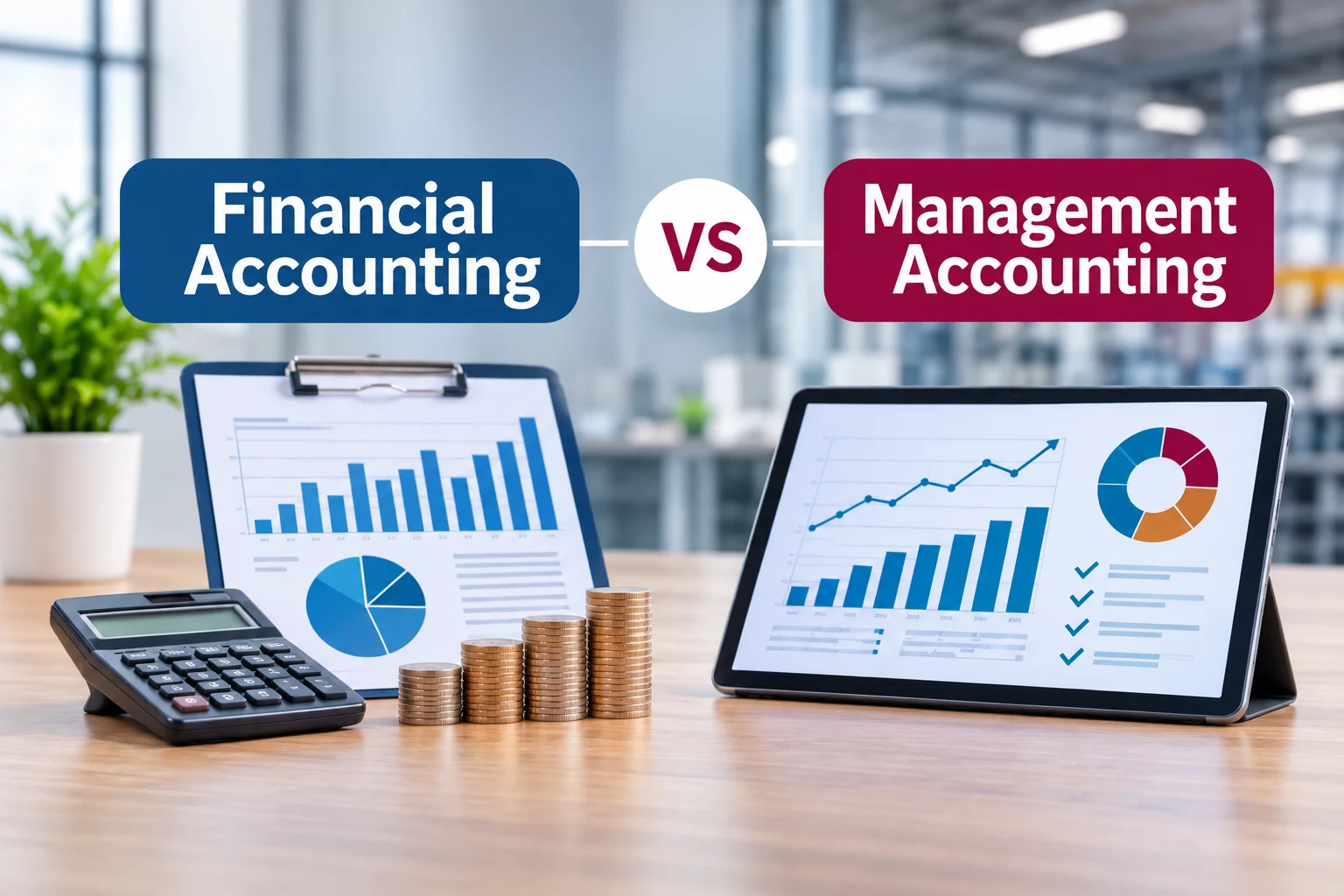
- Difference Between Financial Accounting and Management Accounting: Financial accounting focuses on historical financial reporting, while management accounting supports internal planning, budgeting, cost control, and decision-making.
- The Financial and Management Accounting Difference helps clarify how businesses use financial records and operational insights to improve overall performance.
- While financial accounting helps external stakeholders (such as investors, creditors, and regulatory bodies), management accounting helps internal teams with cost-cutting, forecasting, and strategic decision-making.
- Sage X3 streamlines both financial & management accounting by consolidating financial data, automating the generation of financial statements, and delivering strategic reports & insights into the company’s financial metrics.
What is Financial Accounting?
Financial accounting involves recording a company’s financial transactions in a standardised structure to provide a vital summary of its financial health and performance. The purpose of financial accounting is to make the company’s financial transactions trackable & verifiable, benefiting various external stakeholders, including banking institutions, creditors, investors, tax authorities, and other government regulatory bodies.
ERP software replaces several disconnected systems, consolidating all financial transactions in one place. Acting as a single repository of organisation-wide financial transactions, it cuts down the risk of manual errors, duplicate entries, and data obsolescence. It streamlines everyday financial accounting transactions such as recording daily sales, purchases, receipts & payments, accounts payable & receivable, account reconciliations, and preparation of financial statements.
Importance of Financial Accounting
As we’ve already covered what is financial accounting, let us discuss why financial accounting is so important and why companies have to maintain books of accounts throughout every financial year.
- Financial Transparency: The purpose of financial accounting reports is to provide a clear understanding of the company’s financial condition to different stakeholders. A business can automate and set accounting standards with a finance module in ERP to maintain financial transparency and reporting consistency.
- Prevents Frauds: As per our financial accounting meaning, maintaining financial records allows you to identify reporting errors. Automating financial reporting helps streamline your accounting process, eliminate spreadsheet sprawls, and minimize reporting mistakes.
- Regulatory Compliance: Regulatory bodies, like the Income Tax Department, access a company’s profit loss statements to check income tax payment status. You can avoid trouble with government agencies by maintaining transparent and up-to-date financial records.
- Strategy Building: Cash flow statement, and financial accounting statements (such as Profit & Loss reports and Balance Sheet) are good starting points for strategy development. These allow you to look closely at your financial performance metrics – revenue earnings, operational costs, sales volume, debt, etc.
- Gain Investor Confidence: Financial accounting provides comprehensive information about the financial health and performance of the company, including its growth prospects. It instills trust in the minds of prospective investors who are looking to invest in the company and contribute to its growth story.
Examples of Financial Accounting
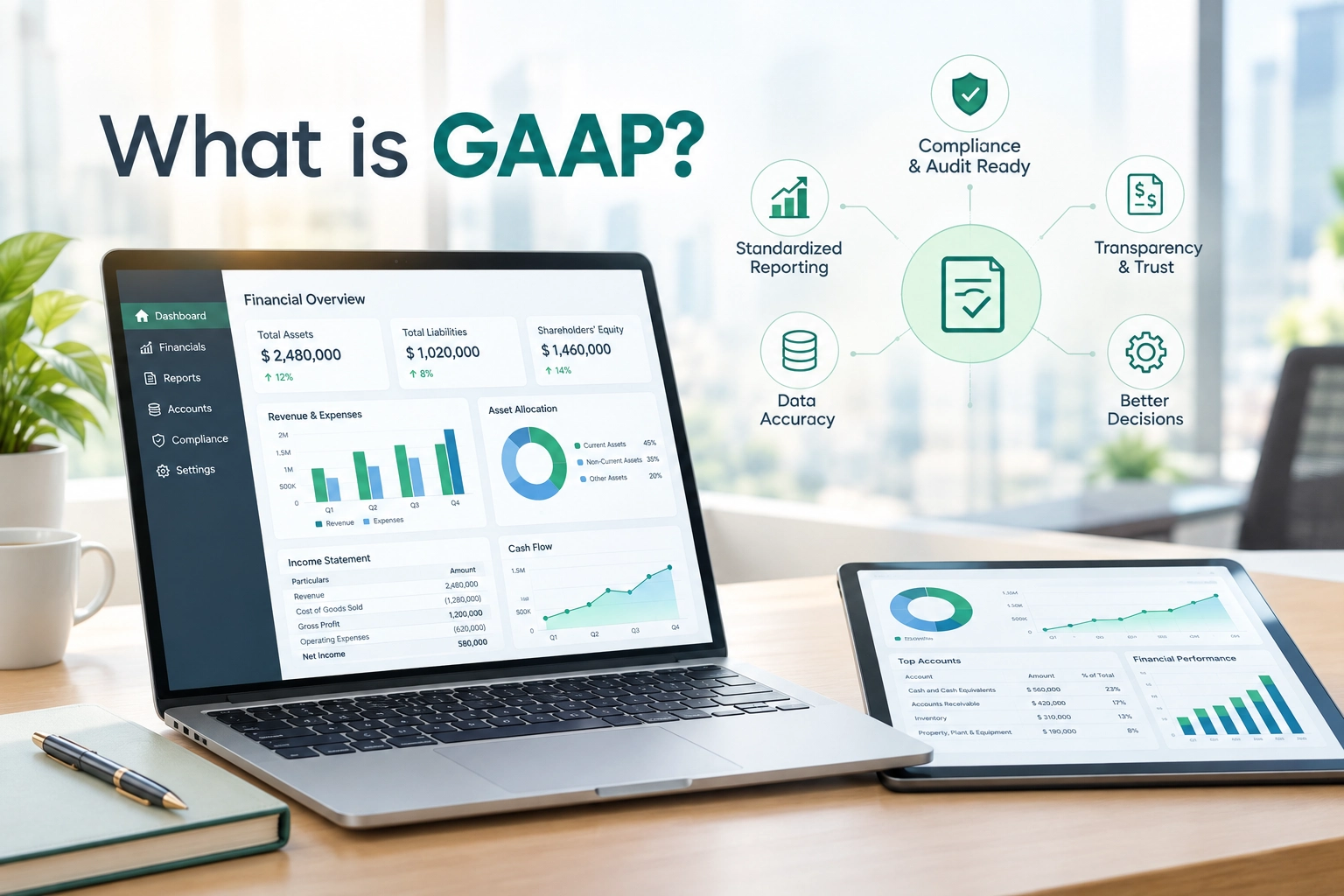
Examples of Financial Accounting include Balance Sheet, Income Statement, Cash Flow Statement, and Revenue & Expense Recognition. An Income Statement provides insights into a company’s expenses, revenues, gains, and losses over a specific period. In contrast, the Balance Sheet provides a snapshot of the company’s financial health & position at a specific point in time. A Cash Flow Statement allows managers to understand the incoming and outgoing movement of cash and cash equivalents for better resource allocation.

What is Management Accounting?
Management Accounting is the use of various methods and techniques adopted to support a company’s internal planning & decision-making, cost control, and budgeting. It includes generation of various reports, evaluation of financial metrics, and data interpretation to help managers make accurate decisions at both operational and strategic levels.
ERP software supports management accounting in various ways. It allows managers to compare various operational metrics, evaluate financial performance, and run advanced scenario-planning models. It provides personalised reports and dashboards to track & control project costs and analyse & boost operational revenue. Furthermore, it offers quick insights into organisation-wide assets for efficient tracking, maintenance, and disposal.
Importance of Management Accounting
Now that we’ve covered management accounting meaning, let us understand its importance and how it supports higher management in decision-making.
- Strategic Planning: The primary objective of management accounting reports is to provide data for discussions and decision-making. These capture historical data, like information on business growth, which aids in forecasting.
- Qualitative Information: As per what we already discussed under what is management accounting, its scope also includes analyzing qualitative data for a holistic overview to aid decision-making. Management accounting reports include qualitative information like industry cycles and R&D activities useful for strategy development.
- Help Achieve Goals: Management accounting collects and analyzes financial data from different sources and presents it in a way that is easier for the management to understand. Insights from the reports help in budget control, cost cutting, and improving the company’s financial health.
- Optimize Resource Usage: Management accounting enables the management to perform activity-based costing, identify the areas of business operations that need improvement, and make efficient use of the organizational resources (whether cash, fixed assets, or human resources). Efficient use of the resources directly translates into higher productivity and enhanced efficiency.
- Identify Cost-saving Opportunities: Decision-makers use the ERP software for management accounting and assessing the cost implications of the potential decisions, and taking appropriate cost-control measures. For instance, they may use robust inventory management software to save inventory storage costs & prevent additional costs & loss of revenue arising from over-stocking/ under-stocking.
Example of Management Accounting
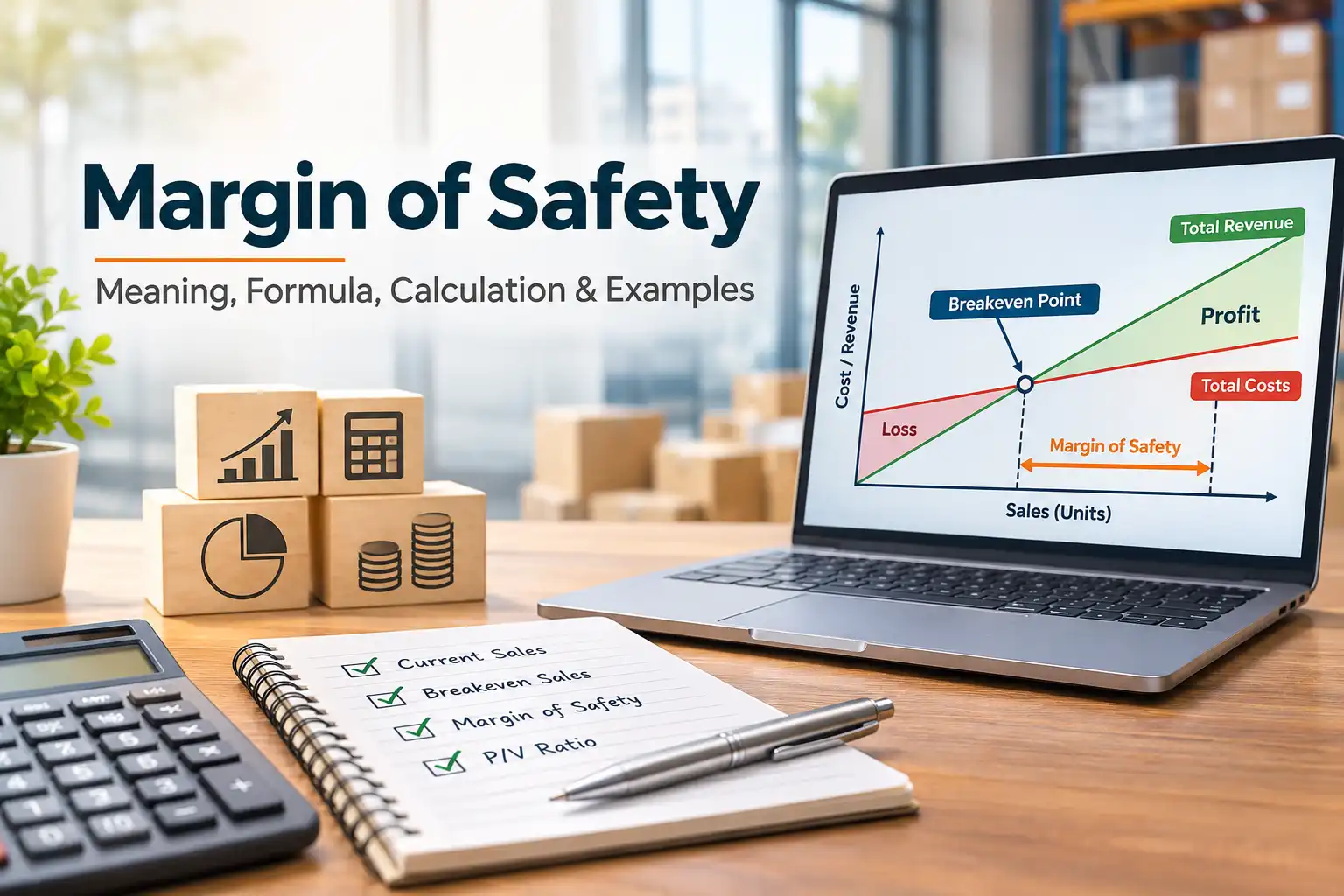
Examples of Management Accounting include Cost-Volume-Profit Analysis, Break-Even Analysis, Margin Analysis, Activity-based Accounting, Budgeting & Cash Flow Analysis, and so on. Some of these formulas help managers understand the relationship between a company’s sales, volume, cost, and profitability, whereas others let them calculate the break-even point, evaluate profit margins, and plan cost control strategies efficiently.
Difference Between Financial Accounting and Management Accounting
The Financial and Management Accounting Difference lies in their objectives, reporting methods, scope, and intended users. While financial accounting focuses on recording and reporting historical financial performance for internal and external stakeholders, management accounting provides insights that help businesses plan operations, control costs, and make informed decisions. The following table highlights the key differences between financial accounting and management accounting. let’s delve into the financial and management accounting difference to get more clarity about each.
Financial and Management Accounting Difference:
| Financial Accounting | Management Accounting | |
|---|---|---|
| Definition | Financial accounting refers to recording, summarizing, and reporting business transactions over a specific period. | Management accounting tracks operational details to generate insights that support budgeting, cost reduction, sales forecasting, and cash flow management. |
| Objective | To communicate financial performance, such as profit and loss, to different stakeholders. | To support management in strategic planning and decision-making by providing insights into various business metrics. |
| Nature of Indicator | Lagging indicator, as reporting primarily focuses on past financial events. | Leading indicator, as reporting primarily focuses on future projections, planning, and strategies rather than past events. |
| Reporting Focus | Internal audiences, such as management and employees, as well as external stakeholders like investors, creditors, and regulators. | Management and internal teams for business planning and decision-making. |
| Time-frame | Prepared at the end of an accounting period, such as monthly, quarterly, or yearly. | Prepared as and when required by management. |
| Systems | Collects and reports financial information, including revenue, expenses, assets, and liabilities. | Identifies operational bottlenecks and analyzes business information to improve efficiency and profitability. |
| Carries Legal Liability | Yes. Financial reporting carries legal and regulatory responsibilities toward shareholders, tax authorities, and regulatory bodies. | No direct external reporting liability, as it is primarily used for internal management purposes. |
| Data Used | Primarily monetary and financial data. | Both monetary and non-monetary data, such as employee turnover, machine hours, and customer satisfaction. |
| Format | Follows standardized formats based on accounting principles such as GAAP and IFRS. | Flexible format prepared according to management requirements and business needs. |
| Requirement | Generally required by law and regulatory authorities for applicable businesses. | Prepared voluntarily to support internal management and business decisions. |
| Scope of Verification | Subject to independent verification or auditing by external statutory auditors, where applicable. | Used by internal teams and generally does not require external auditing. |
Similarities Between Financial Accounting and Management Accounting
After understanding the Financial Accounting vs Management Accounting, it’s equally crucial to discuss the similarities between the two.
1. Horizontal Analysis
Both Financial Accounting and Management Accounting emphasize horizontal analysis to understand the financial changes in the company over a specific period of time. Horizontal analysis accompanied by trend analysis helps decision-makers with timely & accurate decision-making, and gain an understanding of the company’s profitability.
2. Vertical Analysis
Vertical Analysis involves breaking down financial statements into individual components where each line item indicates the percentage of the base figure. In vertical analysis, each data point is the fraction of the revenue generated from total sales. Both financial accounting and management accounting emphasize it.
3. Analytical Techniques
Ratio Analysis and Regression Analysis are extensively used in both financial accounting and management accounting. However, the purpose of ratio analysis is different. Financial accounting uses ratio analysis to evaluate the company’s financial health & performance whereas management accounting uses it to find new ways to increase the operational efficiency of the company.
How Does ERP Streamline Accounting Process?
Enterprise Resource Planning is a versatile solution that provides an agile cloud-based infrastructure to maintain the books of accounts and streamline the recording of business transactions and accounts receivable automation. It comes with a diverse set of modules that benefit different business functions, provide a 360-degree view of business operations, and support rapid business growth.
ERP implementation consolidates information from different areas of the business operations and displays versatile charts & reports that enable decision-makers with access to real-time & authentic information, and data-driven strategies to support rapid growth & expansion. ERP reduces human errors, discrepancies, and compliance risks and ensures your financial accounts are audit-friendly.
Also Read: General Ledger in Accounting: Meaning, Types, Examples & More
Final Words
Financial and management accounting are essential for a business, each serving specific purposes. Understanding the Difference Between Financial Accounting and Management Accounting will empower you to use both effectively for better business planning and decision-making. However, preparing these reports can be daunting without specialized tools such as ERP software.
Sage X3 is an exceptional solution with integrated financial management tools for recording, tracking, and analyzing every transaction for simplified reporting. It streamlines the process, improves accuracy, and helps you meet regulatory requirements. Furthermore, it supports other business activities, from production planning, inventory management, and quality control to customer support.

FAQs on Financial and Management Accounting Difference
1. What is the definition of Financial Accounting?
Financial accounting meaning is that it is a process of tracking, recording, summarizing, and reporting financial transactions to gain information on a company’s commercial performance. It is a prerequisite for companies to communicate their financial performance with a dispersed audience.
2. What is the definition of Management Accounting?
Management accounting meaning is that it is the process of identifying, summarizing, analyzing, and communicating a company’s financial performance to the managers. Management accounting reports may encompass details on product costing, budgeting, forecasting, etc. Management accounting allows them to make future decisions that align with the long-term goals of the organization.
3. What’s the Accrual Method of Financial Accounting?
The accrual method is a process of recording transactions when earned or incurred. Following the double-entry accounting method, accrual accounting records transactions at the time of initiation, independent of cash usage.
For example, a company received a bill of ₹1000 from a vendor to pay in the next month. Under the accrual method, the company must record the transaction this month even though cash transactions will not happen until next month.
4. What’s the cash accounting method of Financial Accounting?
Cash accounting or cash-based accounting records transactions when the actual cash is received or debited. For example, a company receives payment for a service due next month. Under the cash accounting method, the company will record the transaction under revenue since it has received cash.
5. What are the Financial Accounting Principles?
The most popular accounting principles are – the GAAP and the IFRS methods. GAAP is the accounting principle followed in the USA, whereas the IFRS is practiced in 110 countries. Accounting principles bring standardization to record financial dealings across companies and counties, make them easily comparable, and eliminate chances of fraud.
6. What are the examples of financial accounting and management accounting?
Financial accounting example: Recording sales revenue, expenses, assets, liabilities and preparing the income statement and balance sheet.
Management accounting example: Analysing production costs, preparing departmental budgets, forecasting sales and evaluating product profitability.
7. What are the objectives of Financial Accounting vs Management Accounting
Financial accounting: Accurate financial reporting, transparency, compliance and stakeholder communication.
Management accounting: Budgeting, forecasting, cost control, resource allocation and strategic planning.
8. Which is more important, Financial Accounting or Management Accounting?
Both financial accounting and management accounting are important for business success, but their significance depends on an organisation’s requirements. Financial accounting is essential for maintaining accurate financial records, preparing financial statements, meeting statutory reporting requirements, and providing financial information to external stakeholders. Management accounting, on the other hand, helps businesses with budgeting, cost control, financial forecasting, resource allocation, and strategic decision-making. While financial accounting focuses on reporting financial performance, management accounting helps improve future business performance. Therefore, both are complementary and play an important role in effective financial management.
9. How does Financial Accounting help Management Accounting?
Financial accounting provides reliable financial data, such as revenue, expenses, assets, liabilities, and cash flow, which management accounting uses to analyse business performance and make informed decisions. By using financial reports and historical transaction records, management accountants can prepare budgets, forecast future expenses, evaluate profitability, control costs, and support strategic business planning.
10. What is the role of ERP Software in Financial and Management Accounting?
ERP software integrates financial and operational data into a centralised system, making financial and management accounting processes more efficient. It automates activities such as general ledger management, accounts payable, accounts receivable, bank reconciliation, financial reporting, and tax management. For management accounting, ERP software provides real-time insights into budgets, production costs, cash flow, inventory valuation, profitability, and business performance. Solutions such as Sage X3 help businesses streamline accounting operations, improve financial visibility, monitor costs, and make data-driven decisions.