Key Takeaways:
- Sage X3 for manufacturing is an ERP solution that integrates production, inventory, procurement, quality, supply chain, and finance in one system.
- Sage X3 ERP supports discrete and process manufacturing, with capabilities such as production planning, BOM management, MRP, costing, quality control, and traceability.
- By connecting core manufacturing processes, Sage X3 helps businesses improve operational visibility, production efficiency, inventory control, and cost management.
- Sage X3 provides scalable and integrated ERP capabilities for growing manufacturers across multiple products, locations, and increasingly complex operations.
Indian manufacturing businesses are increasingly adopting Manufacturing ERP Software to streamline operations, improve visibility across the supply chain, and gain better control over costs and customer relationships. Manufacturers in industries such as automotive, industrial components, chemicals, food, and pharmaceuticals are leveraging advanced ERP solutions and digital technologies to enhance efficiency, productivity, and business growth.
India’s manufacturing industry is booming, driven by strong domestic demand and the broadening diversification of the country’s export market. Moving beyond simple assembly, India is now aiming at high-value production, making it a crucial player in the global supply chains. Notably, India’s manufacturing sector reported a 9.1% growth in the Gross Value Added (GVA) in the second quarter of 2024-26, indicating an overall positive outlook for industrial growth and its contribution to the Indian GDP.
However, when it comes to digitalization, many manufacturers tend to just opt for accounting tools or continue using their legacy systems with temporary fixes, which adds to complexity. Such solutions are unable to keep pace with their growth.
Whether you run a small or mid-sized manufacturing business or manage multi-site global operations, discover why Sage X3 is the evergreen, scalable ERP solution – a reliable partner in every stage of your growth.
What is Sage X3 for Manufacturing?
Sage X3 is a cloud and on-premise ERP system built for mid-market and enterprise Indian manufacturers. It covers production planning, bill of materials (BOM) management, inventory control, quality assurance, supply chain, and full financial management – including GST, TDS, TCS, and RCM – in a single integrated platform. It supports both discrete and process manufacturing, and is deployed across pharma, F&B, chemicals, automotive, and industrial sectors in India.
Why Do Manufacturers Need ERP Software?
Manufacturers that rely on fragmented tools, including spreadsheets and applications limited to a department or a process, are unable to fully capture growth opportunities. Such systems, whether for accounting, order processing, inventory management, or production scheduling, operate in isolation and do not communicate with each other. As different teams indulge in multiple data entry tasks, it not only reduces operational efficiency but also leads to data duplication and data overwriting.
Since end-to-end processes are not aligned, there is a critical lack of a 360-degree business view. This results in inventory mismanagement, limited control over operational processes, quality, and costs, and ineffective or no data analysis. This ultimately leads to inappropriate decisions and substandard customer service. Further, multiple customers, vendors, and high transaction volume make it increasingly difficult for manufacturers to function smoothly without a solid foundation of an ERP system that aligns with their manufacturing processes.
Key Features of Sage X3 for Manufacturing Industry
Sage X3 manufacturing ERP provides integrated capabilities to manage production, inventory, procurement, quality, supply chain, and financial operations. Its manufacturing features help businesses improve process visibility, control costs, and manage complex production requirements from a single ERP platform.
| Manufacturing Requirement | Sage X3 Capability |
|---|---|
| Production Planning | Plan and schedule production based on demand, material availability, capacity, and production requirements. |
| Bill of Materials (BOM) | Create and manage multi-level BOMs, components, materials, and product structures. |
| Material Requirements Planning (MRP) | Identify material requirements and support timely procurement and production planning. |
| Inventory Management | Track raw materials, work-in-progress, and finished goods across multiple warehouses and locations. |
| Shop Floor Management | Manage work orders, operations, routings, resources, and production activities. |
| Quality Management | Perform quality controls, inspections, and manage non-conformances across manufacturing processes. |
| Lot & Serial Traceability | Track materials and finished products through lot and serial number management for greater traceability. |
| Manufacturing Costing | Monitor material, labour, overhead, and production costs to improve cost visibility and control. |
| Procurement | Manage purchasing processes, supplier requirements, purchase orders, and material availability. |
| Maintenance Management | Plan preventive maintenance and monitor equipment and asset-related activities to reduce downtime. |
| Supply Chain Management | Connect purchasing, inventory, production, warehousing, and distribution processes for better visibility. |
| Financial Management | Integrate manufacturing activities with accounting, costing, budgeting, taxation, and financial reporting. |
| Multi-Site Operations | Manage manufacturing activities across multiple sites, companies, warehouses, and locations from one system. |
| Reporting & Analytics | Monitor operational and financial data through reports, dashboards, and performance insights. |
Why Choose Sage X3 for Manufacturing?
Supporting both discrete and process manufacturing workflows, Sage X3 is well-designed to manage end-to-end business functions, analyze a large volume of data, integrate with third-party applications & IoT devices, and leverage artificial intelligence and machine learning. This directly translates into improved product quality, reduced operational costs, and better decisions across the organization. Moreover, amid shifting customer demands, Sage X3 enables manufacturers to develop flexible workflows that quickly respond to change.
Here’s how does Sage X3 work for manufacturing business:
Sage X3 handles both discrete and process manufacturing workflows from a single platform. Here is what each capability delivers:
1. Customisation Without Compromising Upgrades
While Sage X3 has thousands of out-of-the-box, built-in capabilities, its ERP modules can be customized to meet your specific requirements without compromising standard workflows. For example, the automotive ERP system can be aligned to handle customer-specific part variant requirements. Say if your OEM customer requires the same design of suspension arm in different materials and finishing, with customization, you can automatically generate multiple BOM variants from a single base design during order entry.
2. AI-Powered Demand Forecasting
Sage X3 brings the power of artificial intelligence to the shop floor by identifying demand trends, allowing better capacity planning and adjustments in production plans. Like in the food industry, Sage X3 can analyze historical sales, seasonal demand, and track inventory shelf life to recommend how much to produce and when, to minimize spoilage and overproduction. What’s more, Sage Copilot, the AI-powered finance assistant, connects with Sage X3 to fix accounting errors and speed up month-end closing.
Read more about: AI Features in Sage X3
3. Production Planning & BOM Management
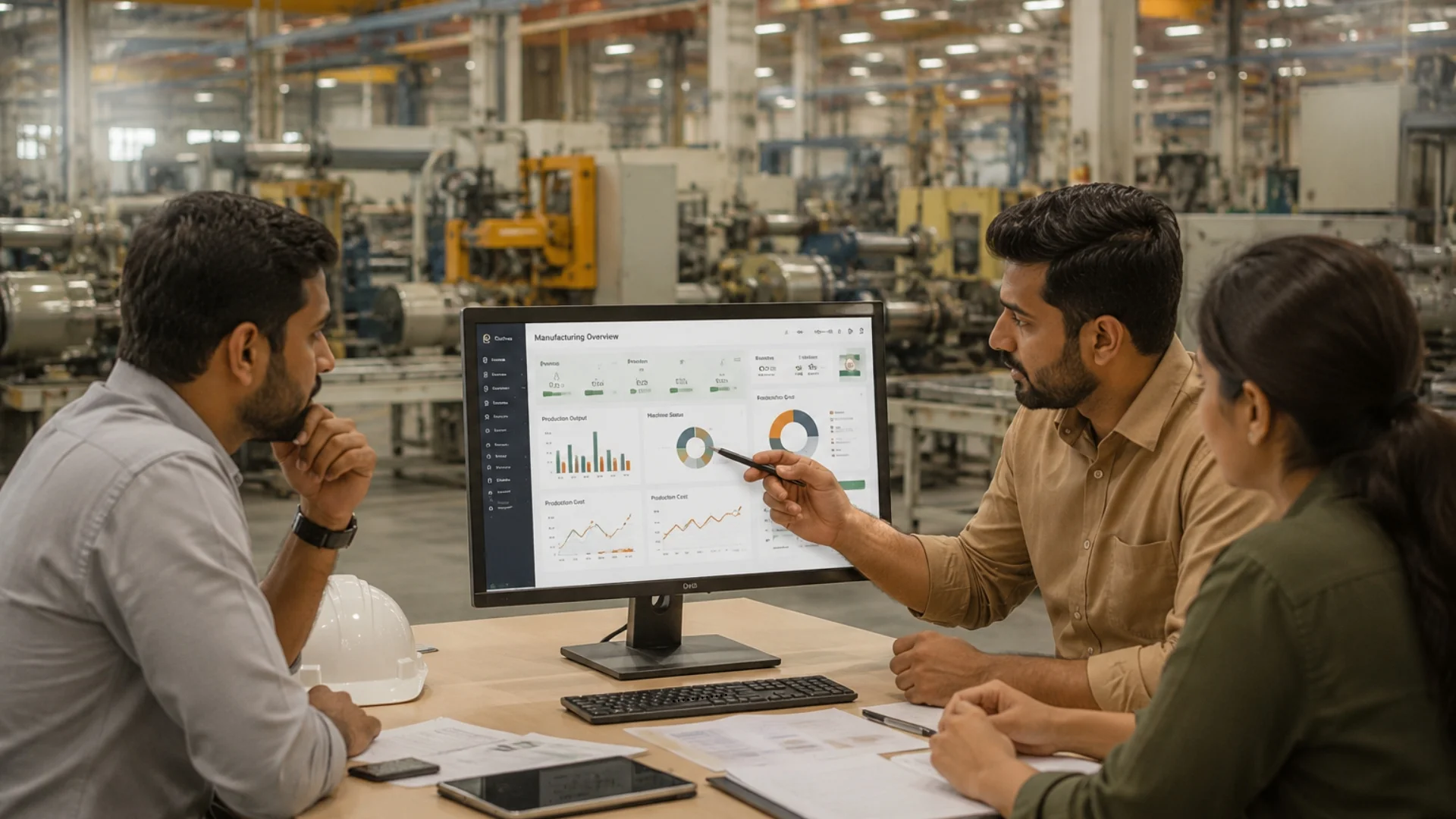
Sage X3 enables you to maintain different types of BOMs to ensure accurate production. Version control allows tracking and storing of major and minor changes in the product design, BOM, and routings so that the right versions can be used when the need arises. You can also monitor production KPIs to bring down operational costs, with role-based dashboards for supervisors and managers. To improve production performance, you get real-time visibility into production progress and resource usage.
4. Inventory & Warehouse Management
Well-managed inventory improves cash flow and leaves more room for expansion. With Sage X3 by your side, you can navigate demand fluctuations and supply chain disruptions with greater ease. By analyzing data on sales, average lead time, and days sales of inventory, you can set safety stock levels, reorder points, and predict future stock requirements. The unit of measure conversion feature in Sage X3 simplifies inventory accounting across production stages, so you can buy steel coils by metric tonnes, yet track them in meters.
5. Quality Control & Batch Traceability
For manufacturers, quality control is always the primary concern for customer satisfaction. Sage X3 enforces quality checkpoints at every production stage — from vendor material receipt through WIP to finished goods. Only material that passes quality inspection moves forward in the supply chain. End-to-end batch and serial number traceability allows targeted product recalls and supports compliance with FDA, GMP, FSSAI, and ISO standards. Quality non-conformances are logged, investigated, and closed within the system.
6. Asset & Maintenance Management
The pressure of order delivery deadlines requires that machines function to their full capacity without breaking down. Sage X3 redefines asset management by managing the entire asset lifecycle. Preventive maintenance in Sage X3 enables scheduled maintenance of equipment, whereas predictive maintenance allows tracking of machine performance in real time to take corrective measures even before a breakdown occurs. This significantly cuts repair and maintenance costs and minimizes unplanned downtime.
7. GST, TDS & Financial Compliance for India
Sage X3 delivers comprehensive financial reporting for your multi-entity, multi-currency, and global operations. Your finance team can easily drill down into financials to analyze cost variances by plant and product line. Advanced bank reconciliations in Sage X3 reduce manual workload through automated, high-volume transaction matching. Meeting tax compliance obligations is no hassle, as Sage X3 automates invoicing and tax management across GST, TDS, TCS, RCM, ITC, and other region-specific or business-specific transactions.
Read here – Why India’s Manufacturers Trust Sage X3 ERP Most
Which Industries Need Manufacturing ERP Software?
Manufacturing ERP software is used across industries with different production models, supply chain structures, and operational requirements. Sage X3 supports both discrete and process manufacturing, helping businesses integrate production with inventory, procurement, quality, costing, and finance.
Discrete Manufacturing Industries
Discrete manufacturing involves producing identifiable products or components using bills of materials (BOMs), production orders, and defined assembly processes. Manufacturing ERP can help these businesses manage production planning, materials, inventory, costing, and traceability.
Common industries include:
- Automotive and Auto Components – BOMs, production scheduling, component inventory, procurement, and traceability.
- Industrial Equipment and Machinery – Make-to-order and engineer-to-order production, complex BOMs, and costing.
- Electronics – Component management, BOMs, production planning, inventory, and quality control.
- Consumer Durables – Production, procurement, inventory, sales, and distribution.
Process Manufacturing Industries
Process manufacturing uses formulas, recipes, batches, or defined production processes to transform raw materials into finished or semi-finished products. ERP software helps these businesses manage formulation, batch production, quality, inventory, and traceability.
Common industries include:
- Pharmaceuticals – Batch production, quality control, traceability, inventory, and regulatory requirements.
- Chemicals – Formulas, batches, production processes, quality, and compliance.
- Food and Beverage – Recipes, batch production, shelf life, inventory, and quality processes.
- Cosmetics and Personal Care – Formulations, batches, raw materials, quality, and product traceability.
Whether a business follows a discrete or process manufacturing model, an integrated ERP system can connect critical operations, improve production visibility, control costs, and support growth.
Read about – How AI-Powered ERP is Redefining the Future of Manufacturing Process?
Conclusion
Sage X3 ERP for manufacturing provides a unified platform to manage production, inventory, procurement, quality, supply chain, maintenance, and finance. With support for both discrete and process manufacturing, it can adapt to the operational requirements of growing manufacturers.
From production planning and BOM management to batch traceability, manufacturing cost control and GST compliance, Sage X3 for manufacturers gain greater visibility across their operations and make faster, data-driven decisions.
For manufacturers looking to replace disconnected systems and build a scalable foundation for growth, Sage X3 offers an integrated approach to managing the entire business.
FAQs about Sage X3 Manufacturing ERP
Q1. What is Sage X3 ERP for manufacturing?
Ans. Sage X3 is used to manage the complete manufacturing operation from a single platform – covering production planning, bill of materials, inventory management, quality control, supply chain, and financial management including GST and compliance. It is suitable for both discrete and process manufacturers across industries including pharma, food & beverage, chemicals, automotive, and industrial components.
Q2. What are the key benefits of Sage X3 for manufacturing businesses?
Ans. The key benefits of Sage X3 for manufacturers are real-time production visibility, automated GST and tax compliance, end-to-end batch traceability, AI-powered demand forecasting, and a single platform for finance, operations, and supply chain. Manufacturers typically report up to 50% improvement in production efficiency and reduction in manual workload of up to 30%.
Q3. Is Sage X3 Suitable for Small Manufacturing Companies?
Ans. Absolutely. Even if you are a small business today, but planning to expand, Sage X3 can scale with your growth. More users, locations, compliance requirements, and higher transaction volumes can be accommodated as your business expands.
Q4. How is Sage X3 different from Tally for manufacturing?
Ans. Tally is an accounting tool designed for small businesses. It does not natively support production planning, BOM management, quality control, or batch traceability. Sage X3 manufacturing ERP manages every function from procurement and production to quality and finance. Manufacturers who have outgrown Tally typically switch to Sage X3 when they need visibility beyond accounts.
Q5. What industries use Sage X3 in India?
Ans. Sage X3 is used across a wide range of industries in India including pharmaceuticals, food & beverage, chemicals, plastics, automotive and auto components, FMCG, personal care, medical devices, packaging, and industrial equipment manufacturing. It supports both discrete and process manufacturing workflows.
Q6. How does Sage X3 compare to SAP for Indian manufacturers?
Ans. Sage X3 offers comparable manufacturing functionality to SAP Business One but at significantly lower total cost of ownership and with faster implementation. SAP is built for large enterprises with complex global operations and often requires expensive customisation and lengthy implementation.