Choosing the right automotive ERP system can help manufacturers manage production, inventory, procurement, supply chains, quality, finance, and customer orders from a single platform. With automotive manufacturers facing tighter delivery schedules, complex bills of materials, quality requirements, and increasing cost pressures, the right ERP software can improve operational visibility and control.
In this guide, we compare the top 10 automotive ERP systems in 2026, including their key features, advantages, and limitations. Whether you are an automotive manufacturer, auto component supplier, or growing automotive business, this list can help you identify the right ERP solution for your requirements.
Top 10 Automotive ERP Systems in 2026 Compared: Ideal Market Type, Key Features & Limitations
Here’s the quick comparison between the top 10 automotive ERP software in 2026
| Automotive ERP System | Business Size Target | Key Features | Key Limitations |
|---|---|---|---|
| Sage X3 | Medium to Large | Adaptive UI Multi-company, multi-country, multi-currency AI-powered Business Intelligence & IoT integration Data-driven insights Extensive customisation options |
Steep learning curve Requires a stable internet connection to avoid disruptions |
| SAP S/4HANA | Medium to Large | Real-time data collection Consolidated financial reporting Multi-tenant SaaS support AI/ML/IoT integration |
Complex and time-consuming implementation May require extra customisations |
| Oracle NetSuite | Small to Medium (Mid-Market) | Unified process control Broad third-party integrations (e.g., Salesforce, Shopify) Customisation options Workflow automation |
Expensive for SMBs Extra costs for training and third-party consulting |
| IFS Applications | Medium to Large | Single Source of Truth across departments Advanced real-time reporting Mobile/cloud access Third-party extensions |
Customization challenges User interface needs improvement |
| Infor CloudSuite Automotive | Medium to Large | Flexibility Personalised KPIs Unified multi-site management Low-code extensibility |
Costly implementation Potential scalability issues |
| Epicor ERP | Small to Medium (Mid-Market) | Comprehensive resource allocation tools Customisable cross-departmental dashboards Highly scalable |
Complex UI Ongoing maintenance and upgrades may require extra resources |
| Microsoft Dynamics 365 | Medium to Large | CRM Sales tracking Lead prioritisation SCM automation Cost analysis tools Multi-device compatibility |
High licensing costs Frequent updates can be disruptive |
| Plex Systems | Small to Large | Cloud-based browser access Shop floor control Multi-level quality management Real-time production monitoring |
Limited industry focus outside manufacturing UI needs improvement |
| SYSPRO | Small to Medium | Cloud accessibility Automated workflows Beginner-friendly UI with preconfigured setups Workspace personalisation |
Steep learning curve Limited customisability |
| QAD Adaptive ERP | Medium to Large | Modern cloud deployment Supply chain collaboration tools Multi-national localization Integrated quality control |
Fewer customization options Limited third-party integration support |
Now, Let’s deep dive into the top 10 automotive ERP software to gear up your growth and improve future-readiness.
1. Sage X3
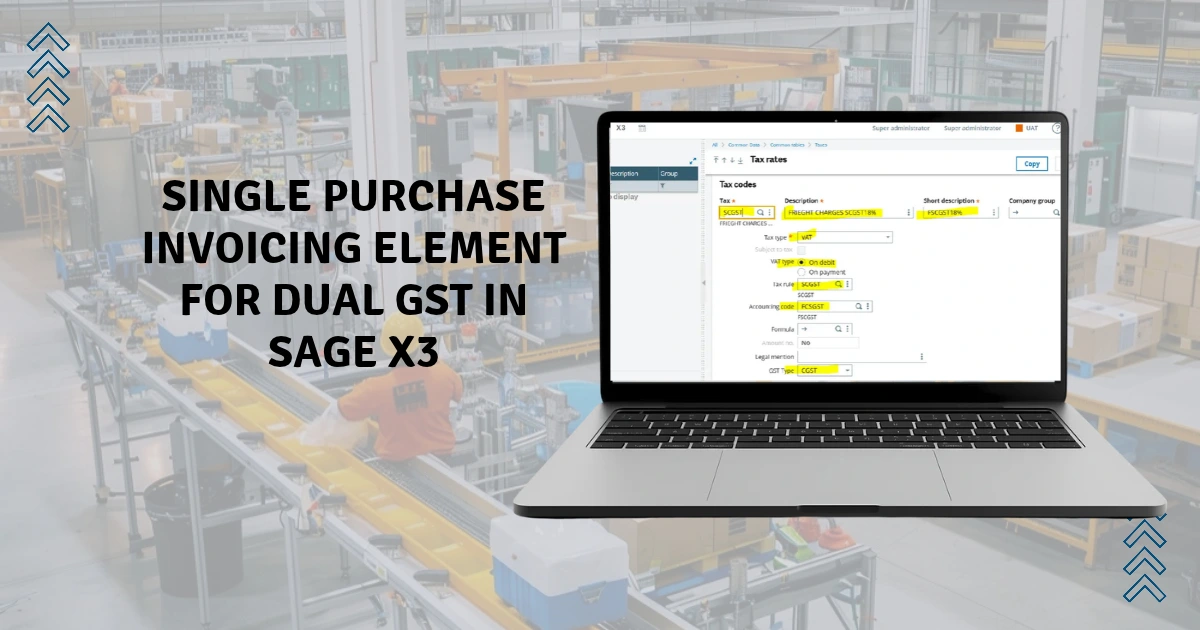
Sage X3 is one of the renowned ERPs that offers a robust range of capabilities needed to get the competitive edge in today’s highly competitive automotive industry. It empowers your business with process optimization, inventory planning, production management, sales automation, and financial analytics. With this best ERP software in India, you can reduce your overhead costs, capture new opportunities, and streamline the path to success.
Features:
- Adaptive User Interface: Offers a user-friendly, adaptive, and intuitive interface with consistency across all interfaces.
- Support for Global Firms: Facilitates support for firms operating at a global level, to meet their unique and geo-specific requirements.
- Data-driven Insights: Provides data-driven insights and analytics to facilitate timely & informed decision-making.
- Integrated Planning Capabilities: Provides extensive planning capabilities to meet the market demands on a timely basis, gain a competitive advantage, and maintain consistency in product quality.
- Customizability: It is highly customizable to meet diverse business needs and bring efficiency in routine tasks.
Limitations:
- Requires a deep learning curve
- Loss of Internet connection can cause disruptions in the day-to-day business functioning.
2. SAP S/4HANA
SAP S/4HANA leverages the in-house database to provide real-time analytics and deep integration with Artificial Intelligence (AI) and Machine Learning (ML). SAP can be integrated into various business functions to enhance organizational productivity and efficiency.
Features:
- Simple Data Modelling: It comes with simple data modeling with no need for extra modeling or mapping required.
- Live Data Collection: It supports the retrieval of live data using the Universal Document. All you need to do is select the right data source.
- Consolidated Reporting: Provides a consolidated reporting of financial statements such as Profit & Loss Account, Balance Sheet, and Cash Flow Statement, which can be combined with the Accounting Master Data.
- Supports multi-tenant SaaS: Supports all deployment scenarios such as On-premise, Single, and Multi-tenant.
- Modern Latest Technologies: Supports advanced technologies such as Artificial Intelligence, Machine Learning, and the Internet of Things (IoT).
Limitations:
- Time-consuming and complex implementation process
- Additional customizations may be required
3. Oracle NetSuite
Oracle NetSuite is a popular cloud-based ERP that offers a host of modules and caters to businesses of all sizes. It is easy to use and fully customizable. It provides end-to-end visibility into key business operations.
Features:
- Centralized Core Business Processes: NetSuite provides a unified platform to connect different business processes and get complete control over business operations.
- Third-party Integrations: NetSuite supports integration with various third-party services such as Amazon, Shopify, HubSpot, and Salesforce, among others.
- Customizability: NetSuite is fully customizable for the unique requirements of your organization to bring better visibility and improve productivity
- Streamline Routine Operations: Your company benefits from automation to speed up the performance of high-performance tasks, such as expedited asset and liability discoveries
- Differentiate Asset & Liability: Helps reduce business liabilities to protect financial health, mitigate risks, and reward shareholders.
Limitations:
- Small and medium-sized businesses may find it expensive.
- There may be additional costs for training and third-party consultancy.
4. IFS Applications
IFS Applications is a specialized automotive ERP that caters to a broad range of industries and offers a host of modules to meet different business needs. It offers inter-departmental collaboration and is known for its scalability, flexibility, and customization abilities.
Features:
- Improved Organizational Efficiency: Automotive manufacturing ERP acts as the Single Source of Truth, eliminates data silos, and enables businesses to gain accuracy, and improve performance.
- Advanced Reporting Capabilities: Gaining access to company-wide reports and data insights becomes easier with its real-time and near-real-time reporting capabilities.
- Mobility: Collaborating with colleagues in real-time and working on organizational processes becomes easier with the remote access functionality and cloud collaboration features in IFS.
- Achieve Profitability: It helps companies respond to dynamic market changes, achieve higher efficiency, and take a competitive advantage.
- Third-party Extensions: Supports a host of third-party extensions that add new capabilities to the application and help manage your business efficiently.
Limitations:
- Customization can be a time-consuming and challenging task
- Need improvements in the user interface
5. Infor CloudSuite Automotive
Infor CloudSuite Automotive is a tailored solution for automotive manufacturers and suppliers. It is cloud-based and supports different business functions such as supply chain, quality assessment, and product lifecycle management, among others.
Features:
- Flexibility: One of the key features of Infor is its flexibility, which offers flexibility and out-of-the-box functionality to support day-to-day business operations.
- Drive Profitability: Infor provides industry-standard tools to ascertain seemingly uncertain market trends, get insights, and bring visibility into business operations.
- Personalized KPIs: It comes with a host of automotive-industry-specific KPIs that help analyze business performance and stay in control of it.
- Unified System: It provides a single unified system that helps automotive companies manage operations across every department and site, regardless of their location.
- Extensibility: It is available in different types, such as On-premise, Cloud, and Hybrid ERP. Infor provides various developmental tools to configure it with minimal coding skills.
Limitations:
- The implementation can take more time than usual
- Scalability issues might occur
6. Epicor ERP
Epicor ERP is a comprehensive ERP that caters to different industries, including manufacturers, distribution companies, retailers, and service sectors. It offers a host of modules to manage supply chain, human resources, and finance, among others.
Features:
- Powerful Set of Tools: Offers a broad range of tools that let you allocate resources, automate business operations, ensure regulatory adherence, and make informed & data-backed decisions.
- Customizable Dashboards: Get comprehensive charts and customizable dashboards for sustained success that depict data across different departments such as accounting, production, supply chain, human resources, etc.
- Easy to Use: The software is easy to use with an intuitive interface and easy-to-navigate interface.
- Scalability: The software is scalable. As your business grows, it can be adapted to meet the growing needs of your business.
- Cost Reductions: Streamlining various business operations not only improves efficiency but also helps control costs. The business benefits from reduced costs and improved competitive advantage.
Limitations:
- Complex user interface
- ERP maintenance and upgradation may require additional resources
7. Microsoft Dynamics 365
Microsoft Dynamics 365 is a comprehensive techno-giant suite that offers Enterprise Resource Planning (ERP) and Customer Relationship Management (CRM) features. The popular cloud-based platform provides a seamless and consistent experience across different sales channels and business operations.
Features:
- Boost Sales: Your business can better keep track of all sales transactions, find new cross-sales opportunities, and prioritize leads based on their revenue potential.
- Exceptional Customer Support: Dynamics automates various tasks in the supply chain using Supply Chain Management Software. For example, it marks all the shipped products as service items and keeps track of them in one place. This allows customer care to address any issues about the shipment queries effectively.
- Reduced Costs: Dynamics assists businesses with cost analysis, job costing, and project costing to reduce costs and improve project profitability.
- Achieve Optimum Efficiency: It automates the generation of various documents such as Bills of Materials, Invoices, and Bills of Landing.
- Cross-device Compatibility: Microsoft Dynamics 365 is available for multiple platforms, including Windows, Mac OS, iOS, and Android. It can be accessed no matter where you are, and which device you use.
Limitations:
- Higher licensing costs
- Frequent updates can be annoying
8. Plex Systems
Plex Systems is a cloud-based ERP that assists with business functions such as inventory, production, supply chain, and quality assessment. Automotive manufacturers can gain from their ability to customize the settings. It provides a comprehensive system to streamline sales operations.
Features:
- Drive Business Growth: Plex charges a monthly/ annual payment and provides access to its services through the cloud medium. You can manage your business operations straight from a web browser, regardless of device and location.
- Shop Floor Control: Provides robust tools for shop floor control and enhancing production capacity.
- Quality Management: Provides multiple levels of quality management, automated validation of inspection disposition, and many other quality assessment features
- Comprehensive Sales Management: Maintains a list of the company’s products and services hierarchically, and provides an instant order lookup using Order ID.
- Real-time Production Monitoring: Offers comprehensive real-time production monitoring to track and analyze the manufacturing process and make informed decisions.
Limitations:
- Limited industry focus
- Need improvements in the user interface
9. SYSPRO
SYSPRO is built to meet the needs of evolving businesses by providing an ERP platform that is scalable, simple, and adaptable. It simplifies complex business operations and caters to all business sizes – whether small, medium, or large.
Features:
- Accessibility: It offers a cloud-based system where users can access their data no matter their location, device, or time.
- Workflow Automation: Other advantages of ERP include workflow automation, where your business benefits from increased efficiency and automation.
- Ease of Use: SysPro offers a host of features, yet it is very easy to use and beginner-friendly. You can get started using a preconfigured system of your choice.
- Actionable Insights: The software provides actionable insights such as targets and deadlines to enable decision-makers to evaluate business performance.
- Workspace Personalization: The interface of SysPro is designed with the user base in mind. With minimal disturbance, users can enjoy a personalized experience.
Limitations:
- Requires a deep learning curve
- Limited customizability
10. QAD Adaptive ERP
QAD Adaptive ERP is considered an Automotive aftermarket ERP. It empowers businesses with real-time access to data to adapt to changing market conditions and become competitive. The product life cycle management in ERP allows you to maintain quality throughout the production process.
Features:
- Cloud Deployment: Offers the ability to leverage the benefits of modern cloud technology in today’s evolving business needs.
- Improved Supply Chain: Offers robust tools that facilitate seamless collaboration, transparency, and trust-building between businesses with its vendors, business partners, and customers.
- Localization: Facilitates multinational features that cater to diverse regulatory requirements, and provides compliance in diverse languages, regulatory environments, and business landscapes.
- Reporting Capabilities: Provides powerful analytics that help businesses become agile in the changing business landscape and make strong data-driven decisions.
- Integrated Quality Control: Provides a comprehensive set of tools to maintain product quality throughout the entire production lifecycle, with product inspection and compliance evaluation functionalities.
Limitations:
- Fewer customization options
- Limited integration support
Drive Automotive Manufacturing Efficiency with Sage X3 ERP
An Automotive ERP system provides valuable insights into the business operations from procurement, manufacturing, sales, and inventory to the supply chain. It promotes coordinated workflow, facilitates proactive maintenance planning, and allows you to reduce unplanned downtimes.
Sage X3 is an indispensable solution that empowers Indian automotive companies that are looking to ease their complex production processes and achieve smarter operations. It is a must-have solution in today’s highly dynamic automotive sector.
FAQs about Automotive ERP Software
1. What is an automotive ERP system?
An automotive ERP system is enterprise resource planning software designed to manage key automotive business processes such as production, inventory, procurement, supply chain, quality, sales, costing, and finance through an integrated platform.
2. What are the key features of automotive ERP software?
Key features include production planning, BOM management, inventory management, procurement, supply-chain management, quality management, traceability, costing, demand forecasting, financial management, and business intelligence.
3. How much does automotive ERP software cost?
Automotive Maufacturing ERP costs vary based on the number of users, business size, modules, manufacturing complexity, deployment model, customization, integrations, implementation services, and ongoing support. A detailed assessment of business requirements is recommended before estimating the total cost.
4. What should automotive manufacturers consider when choosing an ERP system?
Manufacturers should consider their production processes, supply-chain complexity, OEM requirements, quality and traceability needs, integration requirements, scalability, deployment model, implementation support, and long-term business goals.
5. Is automotive ERP suitable for auto ancillary manufacturers?
Yes. Automotive ERP can support auto ancillary manufacturers with production planning, multi-level BOMs, inventory, quality control, OEM order schedules, procurement, and component traceability.