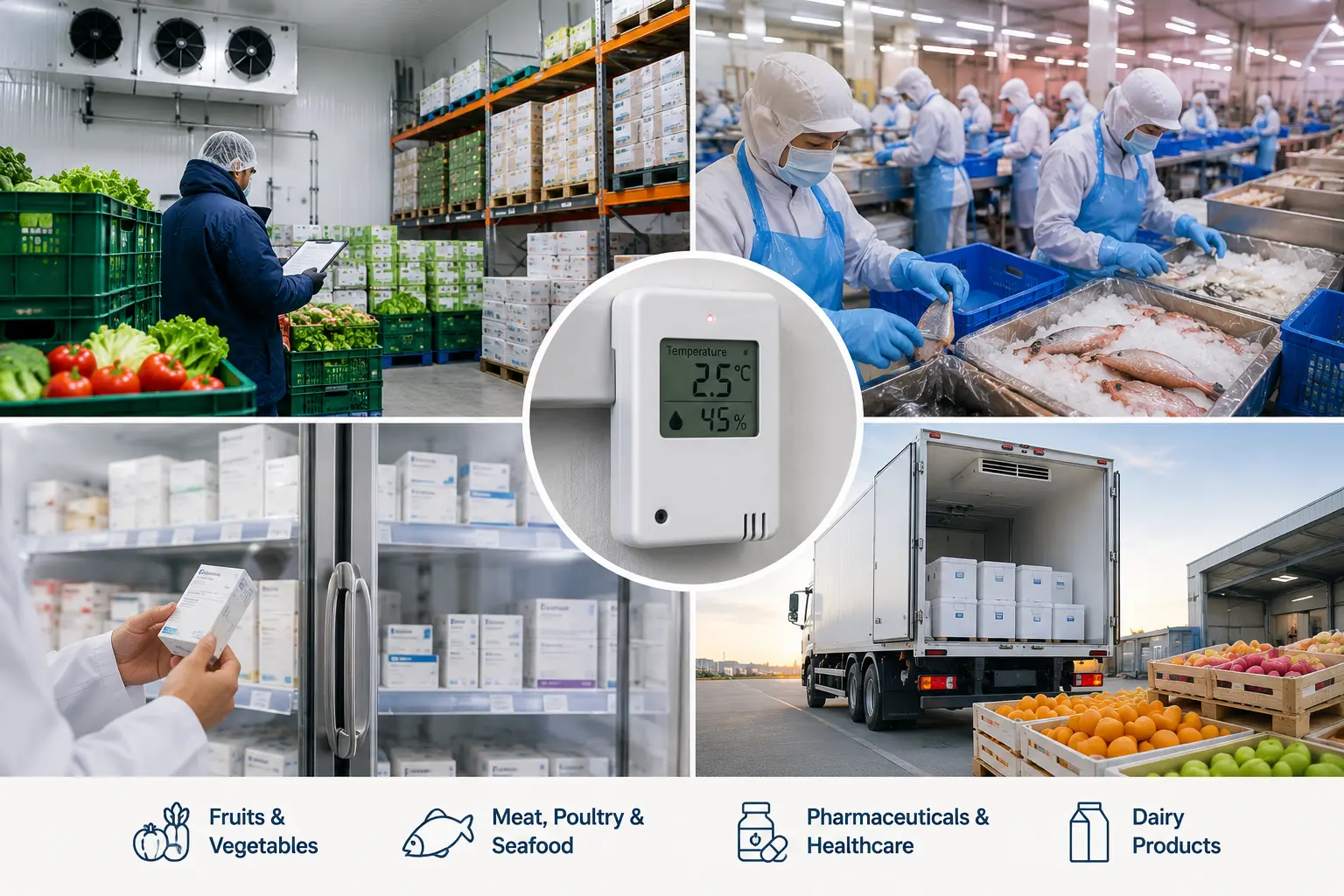
Managing a cold storage warehouse involves much more than simply maintaining low temperatures. Businesses must continuously monitor inventory, storage conditions, product expiry, batches, warehouse space, and order movements while ensuring the quality and safety of temperature-sensitive products. Even small gaps in tracking or monitoring can result in spoilage, inventory losses, compliance issues, and higher operating costs.
This is where cold storage ERP software can make a difference. By connecting inventory, warehouse, temperature monitoring, quality control, and business operations on a unified platform, ERP helps cold storage businesses gain better visibility and control over their day-to-day processes.
In this blog, we’ll explore cold storage ERP, its key benefits and features, the challenges it addresses, and how to choose the right solution for your business.
Key Takeaways:
- Cold storage operations require precise inventory, temperature, batch, and expiry management to minimise product losses and maintain quality.
- Cold storage management software helps businesses improve stock visibility, warehouse utilisation, traceability, and day-to-day operational efficiency.
- A dedicated cold storage ERP can help reduce spoilage, manage perishable inventory, streamline order fulfilment, and control operational costs.
- Key ERP capabilities such as real-time inventory tracking, temperature monitoring, batch management, and automated alerts support more reliable cold-chain operations.
- Choosing the right cold storage ERP software can help businesses improve compliance, decision-making, scalability, and overall profitability.
What is Cold Storage ERP Software?
Cold Storage ERP software is a comprehensive solution designed for food, pharmaceutical, and agricultural businesses that manage temperature-sensitive stocks in a cold storage warehouse. Designed to meet the specific requirements of cold storage companies, it provides a single, unified platform for managing inventory and supply chain operations while ensuring product quality and safety. It enables lot-wise traceability, real-time inventory and temperature monitoring, billing and expenditure management, expiry tracking, and proactive alerts, helping businesses reduce operational costs, minimise product losses, and ensure regulatory compliance.
Overview of the Cold Storage Industry in India
The India cold chain logistics market is projected to reach USD 24.85 billion in 2026 and USD 33.12 billion by 2031, growing at a 5.91% CAGR between 2026 and 2031, according to Mordor Intelligence.
The market is expanding with rising demand for temperature-controlled supply chains across food processing, pharmaceuticals, and agricultural distribution. The growth of organised retail, online grocery platforms, and processed food consumption is also driving investment in modern cold storage and refrigerated transportation infrastructure across India.
Types of Cold Storage
There are mainly three types of cold storage:
1. Control atmosphere cold storage
Control atmosphere cold storage is mainly used for long–term storage of perishable fruits. In this type of cold storage, apart from temperature, concentrations of oxygen, carbon dioxide, ethylene, and nitrogen are maintained as per the requirement of the storage materials. These are mainly used for the storage of apples, pears, lemons, litchi, mango, and other perishable fruits.
2. Temperature-controlled cold storage
This type of cold storage is mainly used for the storage of grains, dry fruits, and spices. In this type of storage, a constant predetermined temperature is maintained throughout the room.
3. High-humidity cold storage
This type of cold storage is mainly used for the storage of fresh vegetables. In this type of storage, a constant predetermined temperature with high humidity is maintained throughout the room. Apart from temperature and humidity, carbon dioxide and air circulations within the products are maintained automatically.
Wherever there is inventory, suppliers, and vendors, there will be a need to maintain the stocks, information, and details about SCM in one place along with the requirements of the clients.
Cold storage management software is useful for cold storage companies to increase the quality and accuracy of information as well as give up-to-date information regarding the account and stock position of any item, handle finance/accounting, sales, service, manufacturing, customer relationship management, etc. in one place.
Challenges Faced by Cold Storage Companies
Cold storage companies in India face a diverse range of challenges, including rising energy costs, controlling temperature, inefficient storage management, difficulty in demand planning, and limited technological integration.
Rising Energy and Operating Costs
Continuous refrigeration is one of the critical requirements in the cold storage industry. Controlling electricity costs can be difficult. It requires extensive planning and analysis. For example, businesses may have to install smart thermostats, service equipment regularly, and clear radiator pathways.
Maintaining Temperature and Product Quality
Cold storage companies deal with temperature-sensitive products. As such, they have to continuously monitor the room temperature & humidity and invest in costly new technologies to avoid degradation in product quality and loss of customer trust.
Inefficient Inventory and Storage Management
Cold storage businesses deal with large volumes of inventory. Manually tracking the inventory can be not only time-consuming but also prone to errors. Lack of visibility into the inventory can lead to delays, waste, and losses.
Seasonal Demand and Capacity Utilisation
The demand for cold storage products can change from time to time. Such seasonal trends & fluctuations need to be tracked to optimise the inventory storage capacity, improve cash flow, and ensure uninterrupted supply.
Limited Technology Integration
Some cold storage companies still rely on several disconnected systems that lack real-time data sharing and integration. Relying on outdated technological tools can impact the management’s business decisions and overall competitiveness.
Also Read: Why Is a Facility Management System Like DimoMaint FM Essential for Restaurants & Cloud Kitchens?
Benefits of Cold Storage ERP
ERP software for cold storage industry enables better monitoring of temperature-sensitive stock of inventory, reduces food waste, optimizes warehouse storage for lower costs & greater capacity, and ensures regulatory compliance.
1. Inventory Tracking & Replenishment
ERP for cold storage industry ensures better organization of frozen and temperature-sensitive food items. Automating manual inventory tracking reduces human error and improves efficiency. It enables organizations to respond to market trends and demand fluctuations.
2. Reduced Food Spoilage & Waste
The cold storage ERP system plays a crucial role in maintaining the right conditions for frozen, temperature-sensitive, and perishable food items, thus reducing food wastage, ensuring food safety, and adhering to local regulatory requirements.
3. Food Expiration Management
Cold storage ERP system brings down the human errors and discrepancies between physical stocks and recorded stocks. It empowers your company with comprehensive food expiration tracking across different batches so that you can prioritize food items with the earliest expiration dates.
4. Optimize Warehouse Storage for Greater Capacity
The ERP software for cold storage industry optimizes your warehouse storage for greater capacity by ensuring your products are organized in an optimum way. It improves item picking speed, improves workflow efficiency, and brings down your warehouse storage costs.
5. Compliance Management
Document everything from procurement of raw materials, product formulations, manufacturing process, and temperature-controlled warehousing to distribution. Ensure strict compliance with Indian and global food safety and regulatory standards.
You May Also Like:- ERP for Alcohol Industry
Key Features of Cold Storage ERP
Sage X3 ERP for cold storage management is an important tool for businesses that rely on long-term storage of perishable items. The cold storage ERP system is specifically designed to help businesses better manage the operational activities associated with storing items in a cold storage environment.
Here are some of the key features of this cold storage ERP:
1. Inventory Management
This feature allows businesses to track inventory levels and daily stock movements in their cold storage facility. The inventory management system also allows them to improve product shelf life and reduce spoilage.
2. Resource Scheduling
Cold storage ERP can help businesses optimize the use of resources such as personnel, machinery, and space. The logistics ERP increases productivity and reduces costs for efficient utilization of resources.
3. Temperature Monitoring
Sage 300 ERP cold storage software keeps track of the temperature inside the cold storage facility. The cold storage ERP enables companies to quickly identify items that are in danger of becoming spoiled.
4. Quality Control
The QC feature of cold storage software helps businesses to monitor the quality of the goods stored in the cold storage facility. It can also help them to identify products that need to be replaced due to quality issues.
5. Real-time Reporting
ERP for cold storage provides businesses with real-time reports on their inventory levels, resource utilization, and temperature levels. This information can be used to make informed decisions and optimize operations. The reports generation time of the cold storage ERP software is also short which delivers accurate reports.
6. Warehouse Management
The advanced warehouse management software helps in optimizing space utilization and increasing the efficiency of the supply chain. The warehouse management system of cold storage ERP tracks product movements and helps in minimizing the loss due to shrinkage and optimizes inventory levels.
Conclusion
With the right implementation of cold storage ERP software, cold storage companies can easily improve the accuracy and overall effectiveness of warehouse operations. It also helps companies to have precise inward and outward detail account management with stock management. With Sage X3 & Sage 300 ERP solutions, cold storage companies can manage inventory orders and can do much to get incredible business outputs.

Frequently Asked Questions
1. What is cold storage software?
Cold Storage ERP is a versatile software that empowers companies operating in the cold storage industry with real-time inventory tracking, temperature monitoring, automated reporting, and end-to-end regulatory compliance.
2. Which businesses require cold storage ERP?
Companies that sell perishable products such as dairy, fish, meat, grains, dry fruits, seafood, and frozen items require a cold storage facility to improve the product longevity and maintain quality. Cold storage facility and the integration of ERP for food industry enables them to track ingredients and preserve the purity of these items while inhibiting biological decay.
3. How to choose the right cold storage ERP?
Here are some tips and tricks to choose the right ERP software for cold storage industry:
- Modern & Intuitive UI: Choose an ERP software with a user-friendly interface to ensure quick adoption by your team.
- Scalable Platform: Scalability is a must-have factor to ensure your system supports growing volumes of transactions and increasing business complexities.
- Industry-specific Features: Choose an ERP software with industry-tailored modules and functionalities.
- Vendor Support: Reduce disruptions in your regular business activities by choosing a vendor providing reliable support and assistance throughout implementation, system adoption, and maintenance.
4. Why Deploy a Cold Storage Inventory Management System?
Businesses across the world deploy a Cold Storage ERP System to avail the following benefits:
- Get an integrated and complete platform for cold chain management
- Enhance food preservation capabilities and ensure higher quality
- Reduce the wastage of inventory
- Create a modern infrastructure to handle demand surges and drops
- Automate routine inventory tasks and reduce human intervention
5. How does ERP benefit perishable food companies?
ERP empowers perishable food companies with powerful inventory planning, management, and replenishment capabilities. It supports different inventory storage strategies such as First-In-First-Out (FIFO), Last-In-Last-Out (LIFO), and First Expired First Out (FEFO), to align with your business strategies, avoid food spoilage & wastage, and improve profitability.
6. How does ERP software help with food expiration tracking?
ERP software provides amazing food shelf-life tracking capabilities to help you decide which foods to ship first. It eliminates the manual need for spreadsheet management, ensuring you always ship fresh, safe inventory.